The lower receiver assembly is the action powerhouse of the AR-15. It is legally considered the firearm itself, complete with a serial number, and must be purchased through an FFL.
From the grip and trigger group to the buffer system and safety selector, each part affects how your rifle feels, handles, and operates. Whether you're starting a new build or replacing worn components, our wide selection of AR-15 lower receiver parts makes it easy to find the right fit for your setup.
AR-15 Grips
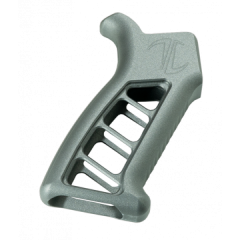
Your pistol grip is one of the simplest, most affordable upgrades you can make to your rifle, and it has a bigger impact on handling and comfort than many shooters realize.
AR-15 grips are available in a wide range of angles, textures, materials, and profiles to suit different shooting styles and preferences.
You'll also find specialty grips with features like storage compartments for small parts and batteries, beavertail extensions for improved wrist alignment, or reduced grip angles optimized for modern squared-off shooting stances. For those restricted-state shooters, there are also California-compliant models designed to meet specific legal requirements without sacrificing ergonomics.
Whether you prefer a slim, minimalist grip with a skeletonized design for lightweight builds or if you're on the hunt for something a little more sophisticated with an over-molded rubberized texture, the options are endless.
AR-15 Trigger Guards
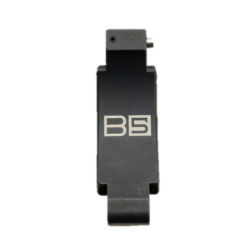
Trigger guards serve a critical role in protecting the trigger from accidental contact while improving overall handling and accessibility. This becomes especially important for shooters who wear tactical or cold weather gloves. While standard Mil-Spec trigger guards offer reliable, no-frills protection, many shooters opt for upgraded versions that provide practical advantages.
Aftermarket trigger guards often feature enlarged openings, making it easier to access the trigger with gloved hands or in high-stress shooting applications. Most aftermarket trigger guards are easy to install with common, easy-to-find tools, with many designs eliminating the need for roll pins or complicated hardware.
AR-15 Takedown & Pivot Pins
Takedown and pivot pins hold your AR-15's upper and lower receivers together and allow you to quickly separate the two halves of your rifle for cleaning and maintenance. While they might seem rather simple, quality pins make a noticeable difference.
Standard Mil-Spec pins are reliable and time-tested, but many shooters opt for enhanced options, like anti-walk pins, extended pins, and even proprietary pins with built-in sling studs or pull rings, maximizing comfort and utility without sacrificing safety.
Whether you're sticking to Mil-Spec or choosing enhanced hardware, quality takedown and pivot pins are a simple, affordable upgrade that can make rifle maintenance quicker and easier.
AR-15 Hammer & Trigger Pins
Hammer and trigger pins are the small components that secure your fire control group inside the lower receiver. Every time you pull the trigger, these pins support and guide critical moving parts, making them key to your AR-15's reliability and safety.
Standard Mil-Spec hammer and trigger pins are more than adequate for most rifles, offering a proven, no-nonsense solution for recreational shooting, home defense, and light competition use. However, with many drop-in trigger systems and full-auto setups, these pins can sometimes shift or "walk" out of position over time.
To address this, many shooters upgrade to anti-walk or anti-rotation pin sets. These pins lock into place using side plates, screws, or retention bars, preventing unwanted movement and ensuring your fire control group stays safely secured inside the receiver, no matter how hard you run your rifle.
It's a small upgrade with big benefits. That said, not all manufacturers recommend using anti-walk or anti-rotational pins, as most models are designed to work with standard pins.
Ultimately, the choice between standard pins and those "enhanced" pins depends on each individual shooter's preferences. When making a purchasing decision, it's important to consider factors such as trigger style and pin compatibility, your specific use case, and, of course, your budget. Each style offers distinct advantages and disadvantages, but there's no right or wrong choice here.
AR-15 End Plates & Castle Nuts
End plates and castle nuts work hand-in-hand to secure the buffer tube to the lower receiver, ensuring your AR-15's buffer system is properly aligned and securely fastened.
The end plate is often made of steel or aluminum and sits between the receiver and buffer tube, holding the rear takedown pin detent in place. Many provide some sort of sling mounting option, but not always.
The castle nut threads directly onto the buffer tube, locking it down tight against the end plate.
Short. Sweet. Simple.
In most builds, these components follow Mil-Spec standards and are staked in place to prevent them from loosening over time. Proper staking ensures the buffer system stays secure, even under extended use and heavy recoil.
AR-15 Lower Parts Kits (LPKs)
Lower Parts Kits, or LPKs, are one of the most convenient ways to complete custom builds or upgrade old factory parts as needed. These kits bundle together all the small internal components you need for assembly, including pins, springs, detents, trigger components, magazine catches, bolt catches, and safety selectors, into a single, organized package.
For new builds, an LPK simplifies the process by ensuring you have every necessary part in one place. It also takes the guesswork out of tracking down individual components. Beyond standard kits, many manufacturers offer enhanced versions featuring upgraded triggers, ambidextrous safety selectors, or extended controls for improved handling and performance.
Even if you're not assembling a rifle from scratch, keeping a spare LPK on hand is advisable. Those small moving parts tend to wear out, go missing, or completely fail, so having extras on-hand help keep your rifle in service without waiting on backordered or otherwise hard-to-find parts.
AR-15 Buffers & Buffer Tubes
The buffer system plays an important role in the basic operation of the AR-15, as it houses the buffer and buffer spring, which are essential to managing recoil and ensuring the rifle cycles correctly.
Buffers come in different weights to fine-tune your rifle's cycling speed and recoil management. Heavier buffers slow down the bolt's movement, reducing felt recoil and wear in over-gassed or suppressed rifles. Lighter buffers, on the other hand, allow for quicker cycling, which is often preferred for competitive setups.
Buffer tubes are typically available in fixed, collapsible, and pistol configurations. While they function similarly and look nearly identical, the tube diameter and threading differ slightly, so it's important to match your stock, buffer tube, and receiver correctly. Many buffer tubes also come with enhanced finishes for added durability and smoother operation.
AR-15 Safety Selectors
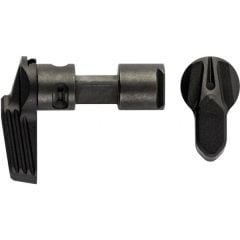
The safety selector is easily one of the most important parts on your AR-15, as it's responsible for toggling the rifle between "safe" and "fire" modes. It's a simple but critical part of your rifle's fire control system, affecting both safety and ease of operation. Failure is NOT an option.
Most factory rifles come with a standard Mil-Spec safety selector, which is a familiar system for most shooters. However, aftermarket upgrades offer a range of improvements. Ambidextrous safety selectors provide better control for left-handed shooters or those who prefer to operate the rifle with either hand. Some models feature extended levers, textured surfaces, or modular designs that allow you to swap out lever lengths and adjust throw angles to suit your preferences.
Whether you stick with a traditional setup or opt for a modern ambi version, choosing a selector that feels natural and engages cleanly makes handling your rifle faster, safer, and more intuitive.
AR-15 Bolt Catches
Bolt catches might not be the first thing you think to upgrade or replace, but they play a pretty important role in ensuring proper function and efficiency. The catch's job is to lock the bolt open after the last round is fired (or when operated manually), facilitate faster reloads, and promote range safety by allowing you to visually confirm an empty chamber.
The catch also allows you to drop the bolt on a fresh, fully-loaded magazine with a quick push of a button with your offhand while maintaining your shooting grip and point of aim.
Standard Mil-Spec bolt catches work reliably, but upgraded versions can offer noticeable advantages. Enhanced bolt catches often feature larger, textured pads that are easier to engage, especially when wearing gloves or operating under stress. Some designs are angled or contoured for quicker manipulation during reloads and malfunction clearances.
AR-15 Magazine Releases
Going hand-in-hand with the bolt catch, the magazine release is a huge part of what makes the AR-15 platform so practical and easy to run. It's a small, easily-overlooked part, but it's one you'll depend on time and time again.
Options are limitless. From standard Mil-Spec mag releases to extended, ambidextrous models and everything in between, if you're building a rifle tailored for speed, ergonomics, or one-handed operation, the right mag release can make a noticeable difference in how your rifle handles and reloads under pressure.
AR-15 Replacement Parts
Small replacement parts like springs, detents, and roll pins aren't always what you want to spend your hard-earned money on, but they're essential to ensuring your AR-15 runs safely, reliably, and consistently.
Springs, detents, roll pins, and other tiny components are responsible for holding your rifle together and keeping its controls functioning smoothly. Lost or broken parts are a recipe for range day disasters that are sure to spoil the fun.
Common replacement parts worth stocking include trigger springs, hammer springs, magazine catch springs, safety detents, takedown detents, buffer retaining pins, and bolt catch detents, among others. It's a good idea to keep a few of these on hand for routine maintenance and those inevitable times when that pesky detent spring takes flight across your workbench and disappears into Ether.
Start Shopping
A reliable, well-built lower assembly makes for a better, smoother-shooting AR. Whether you're starting a new build, upgrading controls, or keeping spare parts on hand, the right components make all the difference. Browse our full selection of AR-15 lower receiver parts and get your rifle dialed in exactly the way you want it.





 KNS Precision .154" Gen 2 Non Rotate Hammer / Trigger Pins for AR-15 / M-16Coupon Available$35.99 $40.99 $29.99 $35.99 Save $9.00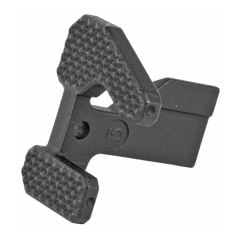


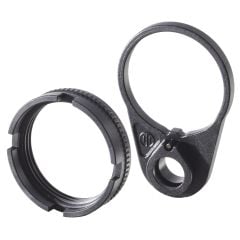 Primary Weapons Systems AR-15 Ratchet Lock Castle Nut / End Plate SetOut of stock$44.99 $39.99 Save $5.00
 CMC Triggers AR-15 Lower Receiver Parts Kit with No Grip or Fire Control Group$39.99 $35.99 Save $4.00

