

Sometimes shooting paper is boring and the ding of steel just doesn’t do it for you. So what can we shoot? Well, have you ever been curious as to how your projectiles perform in soft flesh? You have? Great, let’s make some ballistic gel! Well, ballistic-ish gel. We have a homemade ballistic gel recipe that’s cheap, easy to make, and fun to shoot. Sure, it’s got its limitations, but if you have a free afternoon and want to have a little fun, then let’s start cooking.
What is ballistic gel?
Ballistics gelatin is a testing medium. It’s intended to give ballisticians a medium that can simulate soft flesh. Ballistic gel was originally intended to be similar to pig muscle, which is quite similar to human muscle. Martin Fackler developed the concept, and it really took off in the late 1980s. Prior to ballistic gel, we didn’t have a repeatable, consistent, and easy-to-observe testing medium for projectiles.
There are some basic misunderstandings in regard to the use of ballistic gel. It’s not supposed to be a one-for-one comparison to the human body. It doesn’t take into effect bones, skin, and other factors. It provides a consistent testing medium that could roughly simulate the bullet’s effect on a soft target. In the late 80s, the FBI determined that a bullet should penetrate at least 12 inches of properly calibrated ballistic gel to be effective and no more than 18 inches to prevent overpenetration.
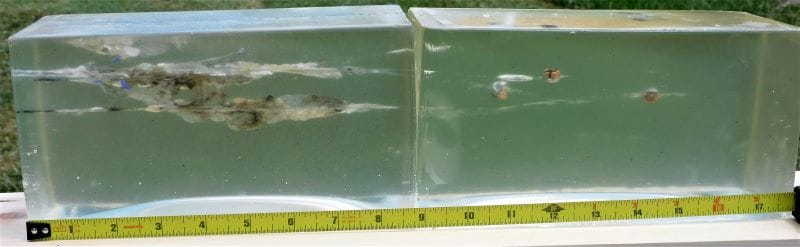
The FBI uses a specific formula with a specific gelatin. You can purchase it and make a proper block, but it can be prohibitively expensive. Our homemade recipe is fairly cheap, and you can find the ingredients at Walmart.
A properly made block of ballistic gel should be calibrated with an air gun firing a .177 caliber steel BB at 600 feet per second. The BB should penetrate between 3.3 and 3.7 inches through the ballistic gel. If your homemade ballistic gel performs to that standard, it meets the FBI requirements.
Limitations of Homemade Gel
As you’d imagine, using grocery store gelatin and a lab that doubles as your kitchen might not create the best results. You might find it difficult to get the right calibration down with an air gun, and it likely won’t perform as well as FBI standard gel. It’s possible that it will work and meet the calibration standards as well. I just wouldn’t get too wrapped around the axel.
If you really want to test your ammunition, it might be worth springing for the synthetic Clear Ballistics options. I would stick to using the homemade ballistic gel as just a fun experiment, something you can do with guns to entertain yourself. That’s why I see it as a fun experiment to shoot. My kids were even interested in my mad science, and were excited to see it get shot!
How to Make Your Own Ballistic Gel
First, you need the supplies. You likely have a few of these sitting around the house already. What you might need to seek out is nonflavored gelatin. Knox is the most famous of the nonflavored gelatins, but Walmart has its Great Value brand as well. I suggest buying the big container rather than the box of pouches. You get more for less.
I spent about $15 to get eight ounces of Knox powder. That was all my local grocery store had. This does limit me to the size of block I can make. It’s not a big deal for this experiment, but if you want a sufficient block of about 20 inches, then you’ll need at least 16 ounces of Knox powder. Knox is pig gelatin. Beef gelatin exists, but I’m not sure how well it would work for testing.
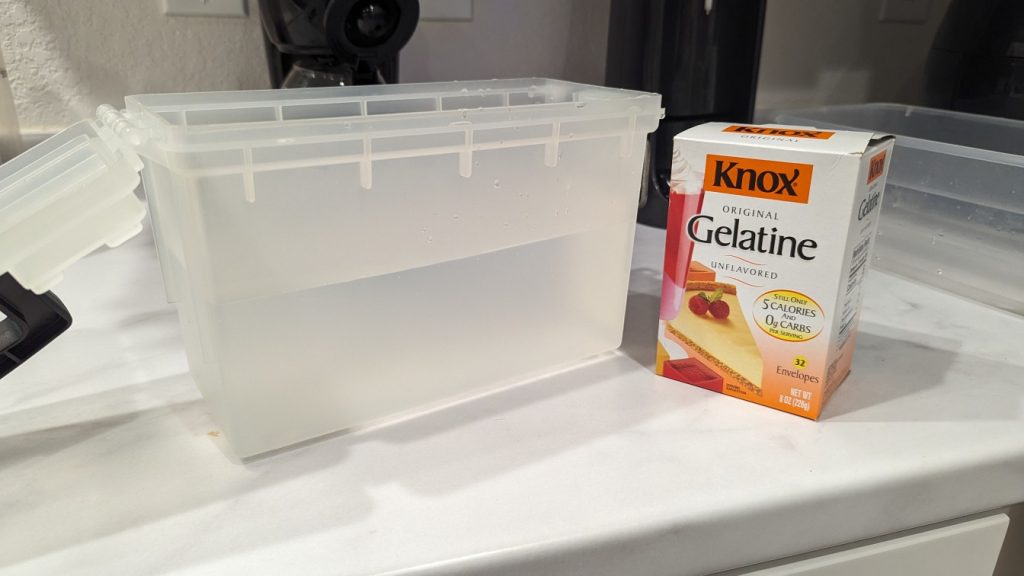
You also need a mold, which is essentially a plastic container of some kind. I used a plastic ammo can that was a little over 11 inches long. My original idea was to make two, but I was limited by the amount of Knox the grocery store had. You also need eight ounces of water per one ounce of gelatin mix. It can be tap water. With eight ounces of gel, I was limited to 64 ounces of water.
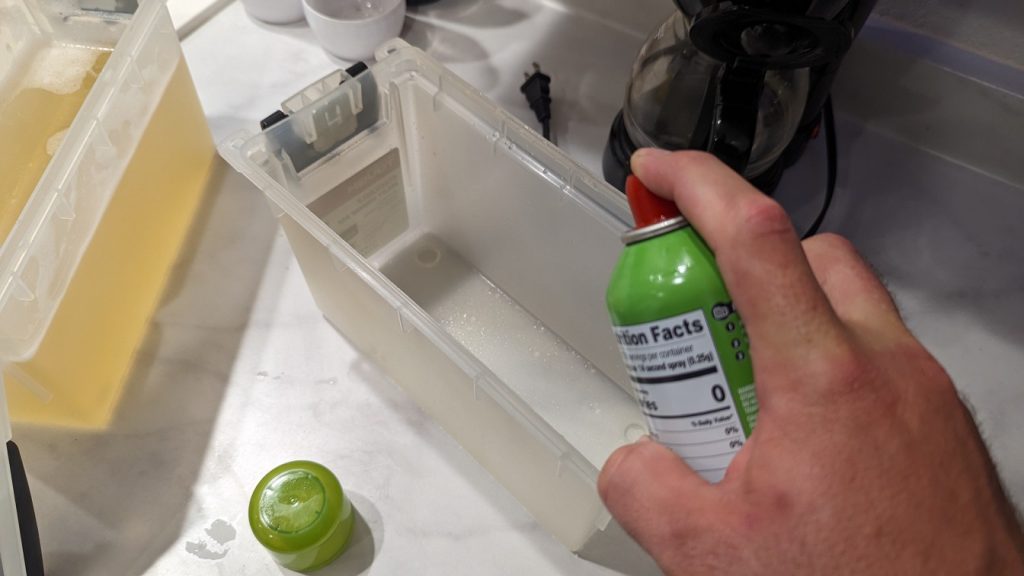
Cooking spray is nice to make it easier to remove the block of gel. You’ll also need a dry measuring cup, a large mixing spoon, a fridge, and the space to store your gel.
Cooking It Up
First, if you are using the small envelopes of Knox, go ahead and open them all and pour them into the dry measuring cup. You have to mix as you add gel and don’t want to be stuck trying to open tiny ¼ ounce envelopes while stirring the mix. Spray your container with some kind of nonstick spray, and then add the appropriate amount of water to your container.
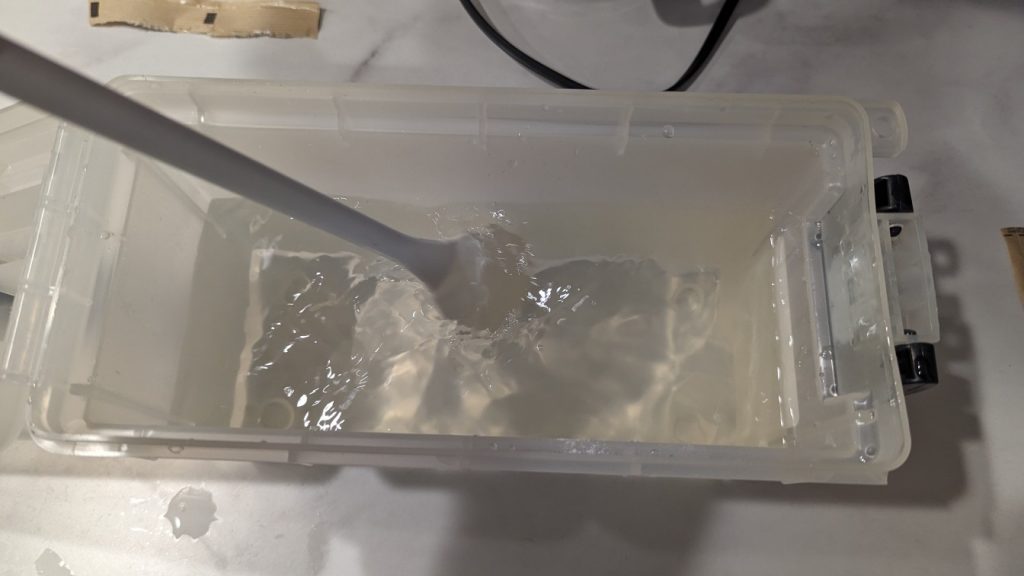
I used another measuring cup to ensure I had exactly 64 ounces of water in the mold. Then I slowly added a little gel as I gently stirred the mix. I didn’t have an exact method, but I would add a bit at a time, roughly a tablespoon, as I stirred. I’d ensure it was stirring in without leaving big globs or unmixed powder. It took me about 20 minutes to mix in the eight ounces of gelatin. You want to mix gently.
Even after I took my time, I had some small granules and blobs that didn’t mix, as well as some foam across the top. You can remove the granules, melt them, and then add them back to the mix, but there were only a few, so I didn’t see the purpose of making my kitchen smell terrible. I did skim the foam off the top of the container and tossed it in the compost.
I closed the lid on my ammo can and tucked it away into my fridge. The mixture needs to sit for at least eight hours at a temperature between 34° F and 36° F. You don’t want it to freeze, but you do want it to solidify.
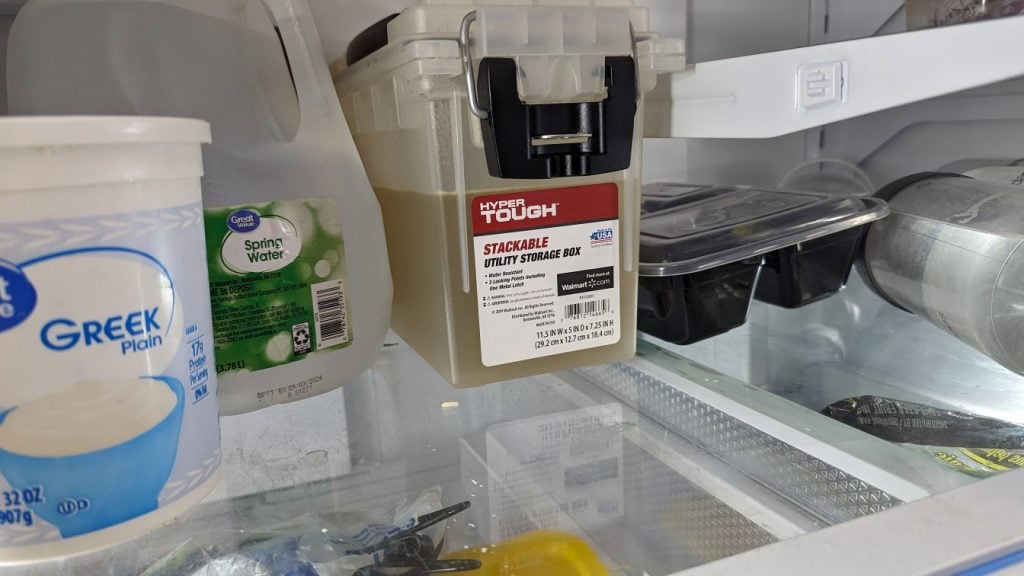
Shooting It
I let my gel sit overnight and for most of the day. When I finally pulled it out, it was a nice gelatin blob that was a bit yellow and cloudy. We’d prefer a clear, easy-to-see blob for testing. Anytime you use Knox gelatin, it will be somewhat yellow. It’s still transparent enough to see through, so let’s shoot it!
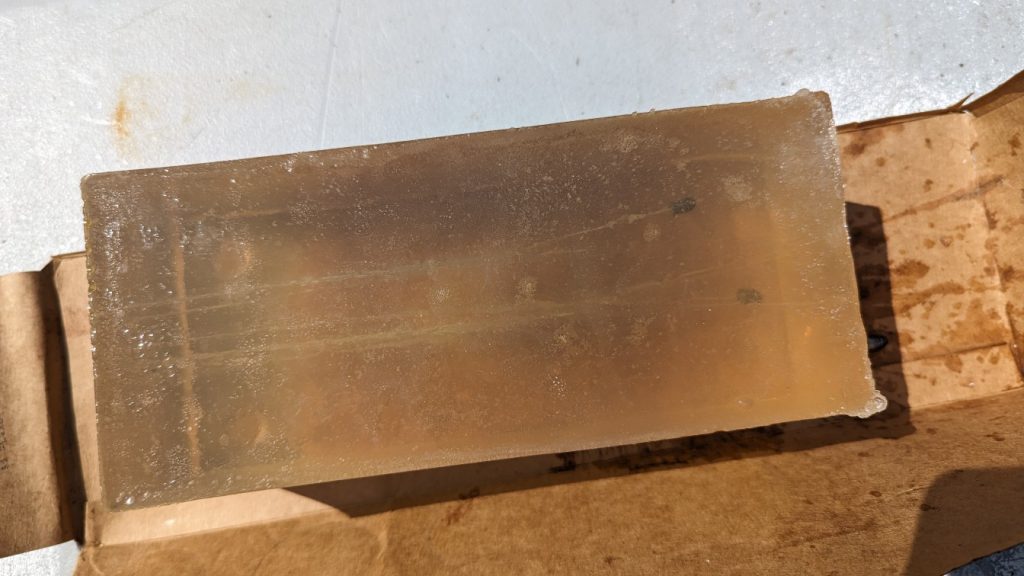
Since my block fell short lengthwise, I used some subcaliber guns in short barrels. I figured a few subsonic 22LR wouldn’t penetrate too deep into the block when fired from an uber-short barrel, and I was right! We were able to see the bullet suspended in gel. It’s pretty fun to film in slow motion and see the gel wiggle and move as the projectiles cut through the block.
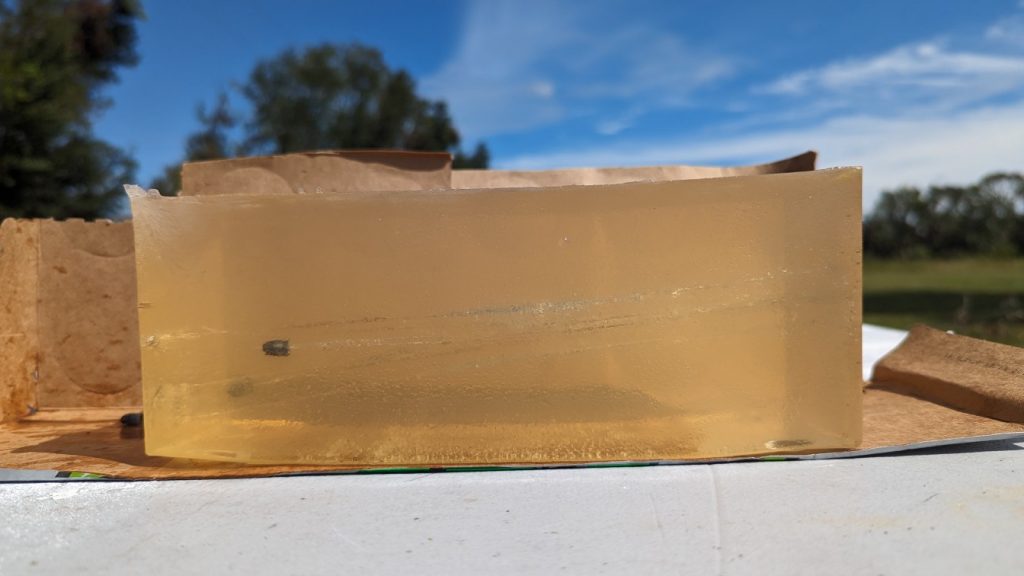
All the kids thought it was fun and neat. Plenty of grubby hands handled the gel, and poked and prodded. You can always cut out the projectiles, remelt the gel, and reuse it. It’s likely going to get cloudier with every use, but there is only one way to find out.
Making your ballistic gel is a blast. It’s an easy way to mix science with guns and feel like a well-armed mad scientist. Give it a try. It makes for a great weekend project.
