
One of my first serious rifles was Ruger’s Mini-14 back in the early 1980s. Since receiving it that Christmas morning, the Mini-14 has always held a special place in my heart. Later on in life, I regrettably had to sell that rifle to make ends meet. As it does, time marches on.
As a teenager, I spent an entire summer working and saving up for an AR-15. It was around 1986 that the Colt AR-15A2 was introduced. Ever since then, I’ve been a huge fan of the AR-15 platform.
Over the years, and to this day, I hear people debating which one is better and the reasons why they support their stance. I’m sitting on the sidelines with popcorn, saying, “I like ’em both!”
To start, why compare the two?
Some people are so enamored with the AR-15 platform that they question why anyone would bother investing in a Mini-14. For me, the answer wasn’t difficult. I got “AR Burnout”, which is to say, most of my focus was on the AR-15 for so long that I simply got sick of the platform. Don’t get me wrong, there’s nothing wrong with the AR, and I like mine a lot because they’re effective and the ergonomics are probably the best out of any semi-auto on the market. Parts and magazines for the AR are incredibly abundant.

Still, I wanted a change, something a little different, as focusing on one platform for so long kind of burned me out. And as I mentioned, the Mini-14 was my first serious semi-auto rifle. I like the look of the rifle, too, which is a consideration. That Garand-style bolt has always held a certain allure, and the sound of it firing and being worked is ultimately unique. That action is just a real classic that appeals to many of us.
The above reasons are part of why I like both platforms.
Longevity & Reliability
Both platforms have been around for quite some time, with the AR-15 having been designed around 1956 and adopted by the US Military (Air Force) as the M16 as early as 1962. Ruger’s Mini-14 began production in 1973. The fact that they are still in production says what needs to be said. If they were unpopular or junk, they wouldn’t still be produced, and yet both show no signs of slowing down.
Both platforms have had their crosses to bear. In the early years, the M16 was plagued when the military changed the powder being used in the 5.56mm rounds, which led to reliability issues. To make the problem worse, troops were told that the weapon was “self-cleaning” and never needed to be cleaned. In fact, no cleaning gear was issued initially! Thankfully, these issues were sorted out before very long, but the reputation still sticks in some peoples’ minds.
The Mini-14 has also sometimes had a reputation for spotty reliability. This stems from aftermarket magazines, most of which aren’t reliable. If you want the ultimate reliability for your Mini-14, use Ruger factory magazines, and don’t waste your time and money on imitations.
Aside from that, both of these platforms are really pretty darned reliable.
Direct Impingement vs. Piston
Speaking of reliability, we’ll discuss the gas systems of each rifle for a moment. The AR-15 uses a direct impingement (DI) system, in which gas is bled from the barrel, travels down a tube to the rifle’s bolt carrier, and pushes the bolt and bolt carrier back, chambering a fresh cartridge on its return.
Critics correctly state that this process deposits fouling and hot gasses into the bolt and chamber area. Although I don’t think it’s as big an issue as some folks make it out to be, it does dirty the components, and that’s a fact.
Some AR-15 designs have been developed to use a piston, which negates gas from traveling to the chamber area. This is wonderful, except that each manufacturer’s piston system is different (proprietary), so there’s no standardization. If you want or need parts, you have to go to the specific manufacturer, which sucks if they’ve gone out of business or no longer make those particular parts.
Ruger uses a fixed piston as their standard operating system for the Mini-14. It works reliably and does not blow gas and fouling into the bolt. Of course, the system (along with every part and component) is from Ruger, so it’s proprietary as well. However, the huge advantage is that the bolt and chamber area stay clean for a very long time and don’t seem to accrue fouling. It makes cleaning far easier, and we don’t have to clean nearly as often.
As we said, both systems have been tried and tested, and both work well enough.
Magazines
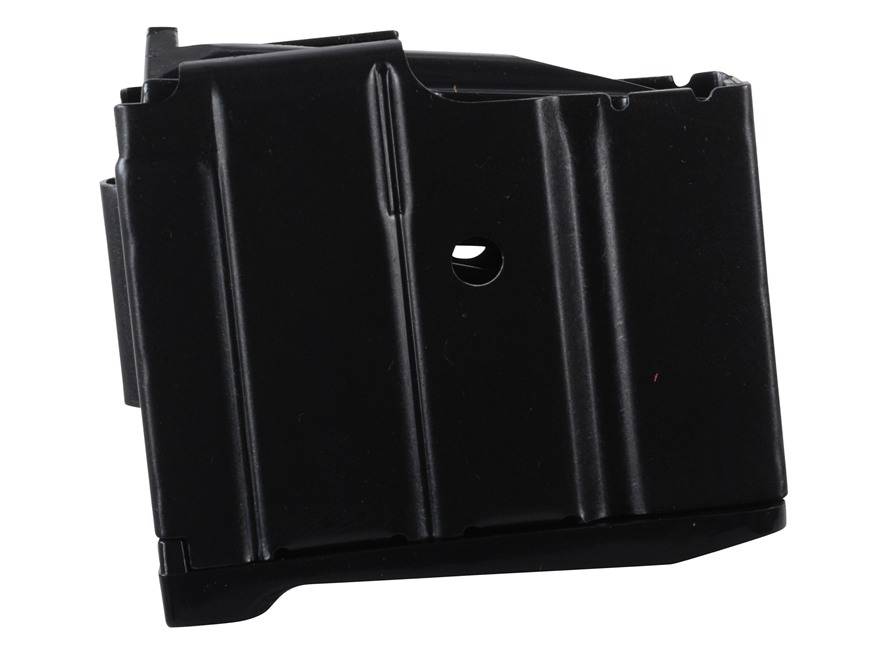
I spoke a little earlier about Mini-14 magazines. Use the factory type if you’re after reliability. End of story.
This raises a few small issues. First, not every place that sells gun parts carries Ruger factory mags. They’re far from impossible to find, but they’re not as plentiful as with the AR-15. My recommendation is to get a ton of factory mags now while you’re still able.
Secondly, Ruger factory mags are a little pricier than AR-15 magazines. Currently, they sell for $34.99 each for 10- and 20-round magazines. That’s not an outrageous price, and we usually don’t bat an eyelash when our pistol magazines cost about that much. But we’re spoiled by the cheap prices of AR-15 magazines, and so we wail in agony when we have to put money out for the Mini-14 mags. Oh well, buy once, cry once.
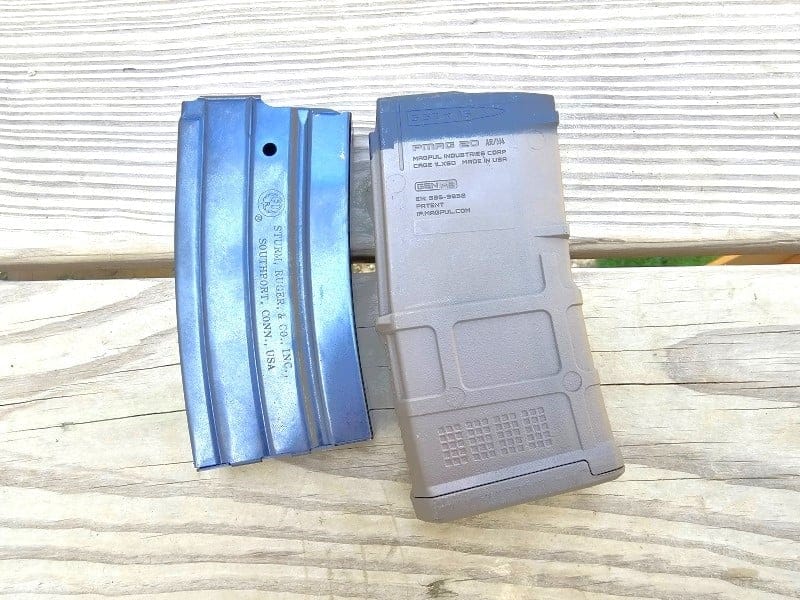
The good news is that the Ruger factory magazines are very durable and well-made. They tend to last a very long time. I’ve found the 20-round magazines to be 100% reliable, and they’re also compact. Ruger makes 5, 10, 20, and 30-round magazines for the Mini-14, so even if you’re living behind enemy lines, you can still have decent capacity with the 10-rounders.
As for AR-15 magazines…they are everywhere and amazingly inexpensive. And we have several configurations to choose from, whether they are steel, aluminum, or polymer. This availability makes the AR-15 king in this department, and the cost cements it in place further. My personal favorite magazines are the Magpul PMags; their construction and durability are second to none, and they are downright cheap. You can get a Pmag for less than $10, and they are about the highest quality magazine on the market.
I just wish Magpul would make magazines for the Mini-14! Magpul, are you reading this?
Cost Effectiveness
There has been much debate regarding whether the Mini-14 is as cost-effective as the AR-15. It all depends on how you look at it. Can you get a quality AR-15 for under $1,000? Yes. Then again, your definition of quality is subjective. Many people don’t feel comfortable unless they get an AR-15 from one of the expensive manufacturers, some of which will set you back well over $2,000.
As this is written, a Mini-14 will probably cost around $1,000 new. However, if you’re patient and shop around, there are deals to be had. You can sometimes find them barely used for well under $1,000.
It may boil down to the magazines and accessories available for the platform you’re after, in which case the AR-15 will win the race.
Personally, I was fine spending a little over $1,000 for a new Mini-14 because…well, I wanted the damn thing, and that was that! And honestly, $1,000 for a rifle these days isn’t an outlandish price. Have you shopped around lately? Try finding a lever action rifle for much under $1,000.
Modularity
This brings us to our next topic: modularity, which basically amounts to the accessories that you can attach to the rifle via bolts, Velcro, rail system, Gorilla Glue, etc.
The AR-15 wins this one, hands down, without breaking a sweat. If it tickles your fancy, you can bolt enough accessories onto an AR-15 that you’ll need to mount wheels and a gun shield to it so it resembles one of those crew-served Soviet machine guns from WWII. Lights, lasers, scopes, red dot sights, grenade launchers, chainsaws…whatever blows your hair back, they make it for the AR-15. And more rail systems than you can shake a stick at!
The Mini14 doesn’t have quite the cottage industry that the AR-15 does in that department. This, however, is not a negative as far as I’m concerned. I’m not a Delta/SEAL/Ranger who’s going to be fast-roping from the Space Shuttle onto the Gaza Strip in a hostage rescue operation, so I don’t need all that gear.
I have a scope mounted on my AR-15 to increase its effective range. At some point, I’ll likely mount a light for low-light scenarios. That’s about all I’d ever want to affix to my rifle. The Mini-14 does come standard with scope rings and a Picatinny rail for mounting various optics, so all is not lost.
There are a couple of options for the Mini-14 for those who want a light and some sort of optic. So, for me, the Mini-14 works just fine in this arena, as I’m not going to add a pile of gadgets to my rifle either way. If you prefer your weaponry festooned with the latest special operations gear, the AR will be the obvious choice for you.
Legalities and Social Perception Profile
Many people vocalize the sentiment, “I don’t care what others think about my weapons! Too bad if they don’t like them!” Okay, fair enough. I have a little of that running in my blood, too, so I get it.
That said, sometimes it’s advantageous to fly under the radar, and the Mini-14 can do that far better than the AR-15. The AR is perceived by many as to be “scary”, while the Mini-14, with its wood furniture, is far better received and raises less alarm among the sheep. In certain scenarios, that could mean the difference between having trouble with the law and not. I don’t like that things are that way, but that’s the way it is. The Mini-14 looks more like a hunting rifle.

Beyond perception, legalities come into play in certain areas. Some places have made it impossible to own an AR-15 because of their laws. In the vast majority of those places, one can still legally own a Mini-14. In such cases, the Mini-14 allows people to legally have a rifle with which to use and defend themselves while not running afoul of the law.
Some might question whether the Mini-14 is as effective of a weapon as the AR-15 is. I believe, generally speaking, it is. If you’re forced to defend yourself with a Mini-14, you can do it about as effectively as you can with an AR-15. Both will put rounds on target effectively at realistic ranges.
For this category, the Mini-14 wins hands down.
Shop This Article
-
Lancer L5 Gen 2 AR-15 .223 / 5.56 10-Round Advanced Warfighter Magazine - BLK
 $20.99$15.99Save $5.00


Accuracy
That brings us to the accuracy department. Granted, earlier Mini-14s were not the most accurate rifle around. Groups of 4-6 inches at 100 yards were not unheard of. However, at self-defense distances, such as home invasions, this is more than enough accuracy.
In 2005, Ruger reconfigured its tooling methods and equipment, tightening up tolerances, which greatly improved accuracy. Today’s Mini-14s can be expected to deliver 2 MOA or better accuracy. We tested this at the range, obtaining a group that was just over 2 MOA with open sights and standard 5.56mm ammunition.
If you have a Mini-14 with a serial number prefix of 580 or higher, yours has the newer improvements. The cold hammer forged barrels are also a bit heavier (this was introduced around 2007), which helps lessen barrel flip and withstand heat from use better than a thin barrel.
Most AR-15 rifles enjoy very good accuracy and always have. My Stag Arms M-4gery, which is not a top-of-the-line carbine, obtained a 1 1/16-inch group at 100 yards using Nosler 77-grain Match ammunition.
Another thing to consider is that the Mini-14’s sight radius is longer than that of the AR. Both of their rear sights are at the rear of the receiver, but the Mini-14’s front sight is typically at the muzzle or close to it. With the AR-15, the front sight is at the end of the handguard in most cases.
For practical purposes, I’ll call this category a draw, as one platform doesn’t have a huge advantage over another unless you’re going to be shooting at extended ranges. In that case, the AR-15 will probably pull ahead.
Ergonomics
In this category, the AR-15 enjoys a solid lead in that it has some of the very best ergonomics of any semi-auto rifle in existence. The controls are perfectly placed. The safety lends itself to being easily manipulated by the thumb. The magazine release is easily accessed with the trigger finger. The bolt release can be activated using the support hand efficiently. All of this, of course, is assuming the shooter is right-handed.
The Mini-14’s controls are similar to those of the M-14/M1A and AK-47. The bolt handle is on the right side of the receiver. The magazine release is a small lever (or paddle style) located just behind the magazine. It can be accessed using either hand, making it ambidextrous.
Magazines for the Mini have to be removed using the support side hand, while mags for the AR usually drop free when the release is pressed. Conversely, AR magazines are seated using a straight-in motion, while Mini magazines have to be rocked in front-to-rear.
Although the AR wins this category, the Mini is not in terrible shape when it comes to manipulating the controls; it just takes some practice.
Stock Options
One area where the Mini-14 pulls ahead of the AR-15 is in the stock options. The AR-15 has a buffer tube that fits inside the stock, and with few exceptions, this is the rule. So it has to have a stock or, at the very least, a buffer tube that protrudes from the rear.
The Mini-14 has no such protruding buffer tube, which frees it up for folding stocks. Historically, Ruger’s factory folding stock was a very popular item, and now Samson has taken over as an official licensee for Ruger in making these stocks. Take it from me: these stocks are the cat’s pajamas in that they fold up into a very compact package while still being very comfortable to shoot when they’re extended. The pistol grip makes control better as well. I have one for my Mini-14 and like it a lot. Plus, it gets points just based on its appearance and coolness.
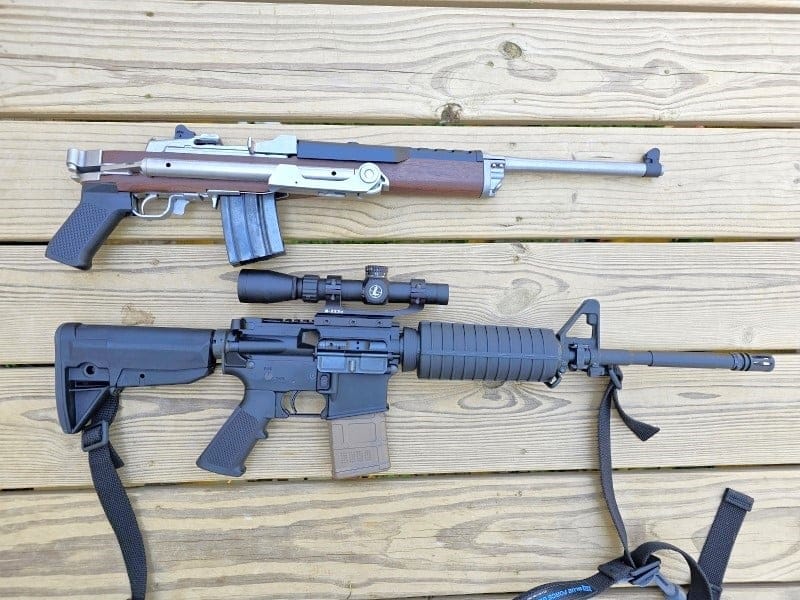
Of course, the factory plain stocks are also very effective. My Mini-14 came with a synthetic black stock from the factory, and while it works very well and is durable, I think it looks ugly. A friend had a wooden factory stock, and when he offered it to me, I quickly bought it and couldn’t be happier.
All in all, the Mini-14 can be shorter and more maneuverable because of the potential to have a shorter stock. With the folding stock, they are incredibly easy to store, as well.

Other Considerations
Trigger
The Mini-14 has a really nice trigger out of the box. The ones on the Minis I’ve had experience with have all been very crisp, if not light. AR-15s…well, it’s a roll of the dice. Some are great, some suck. If you want a really nice one, you’ll likely be spending some money to get an aftermarket trigger. The Mini-14 wins this one easily.
Warranty
Ruger’s warranty is outstanding, and their customer service is widely praised. I know people who have dealt with them, and they praise Ruger for their customer service. The warranty on the AR-15, however, depends on which company you bought it from, and it will vary widely.
Parting Shots
It is true that the AR-15 is superior in some areas to the Mini-14, especially in ergonomics and modularity. Yes, I can do a magazine change faster with the AR-15 based on its manual of arms. However, is that a real issue, given that I’m very unlikely to ever need to perform a magazine change in a defensive scenario? Probably not. I’ll have at least 20 rounds on tap, and it’s incredibly rare that I’ll ever need to do a mag change, though not impossible. And if I ever do need to, I imagine I can accomplish it with the Mini-14.
Other areas, such as the available stainless finish and piston-driven gas system, give the Mini-14 an edge. Not to mention its lower-profile appearance, which can be important in many instances.
The bottom line is that if you are restricted to owning and using a Mini-14, you are far from being hamstrung, so don’t feel that all is lost if you can’t own the AR-15. The Mini-14 will allow you to put rounds on target about as well as the AR-15 will, but it will do it in a less threatening manner (if that makes any sense). Between the triggers, the Mini-14 gives you a better one out of the box, in all likelihood. And if you’re just yearning to have a rifle that’s different from the AR-15, the Mini-14 gives you an option that’s reliable and accurate enough to hold its own.