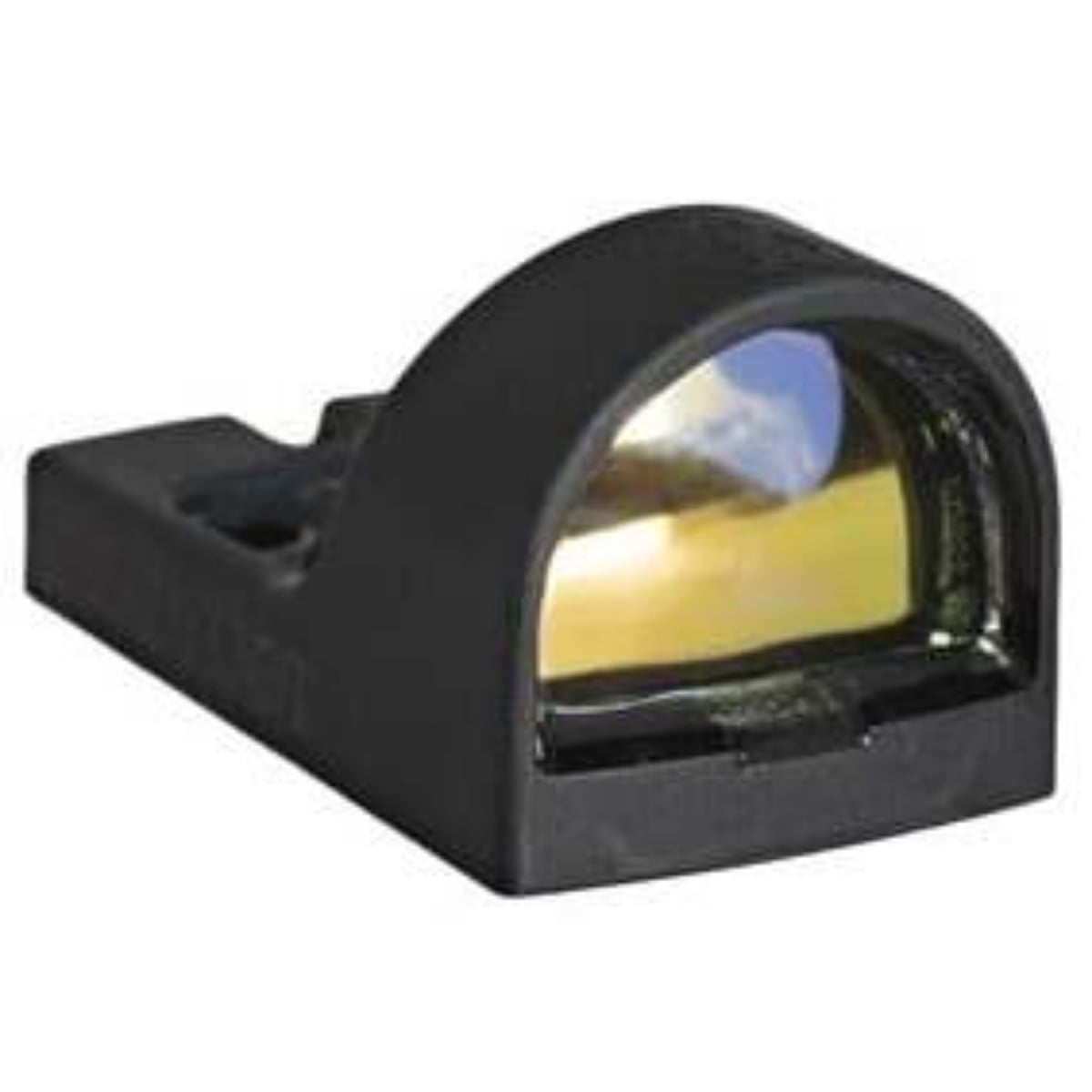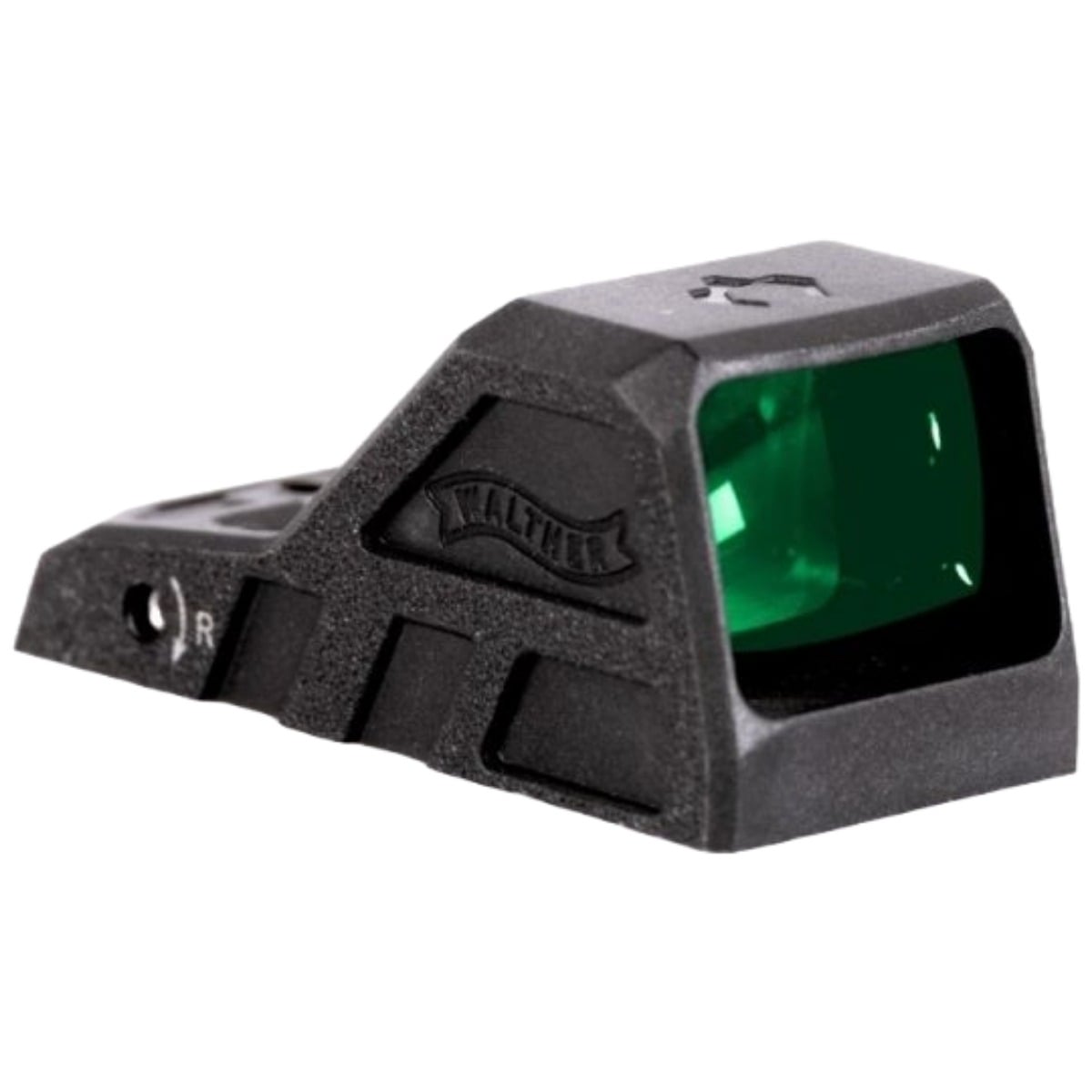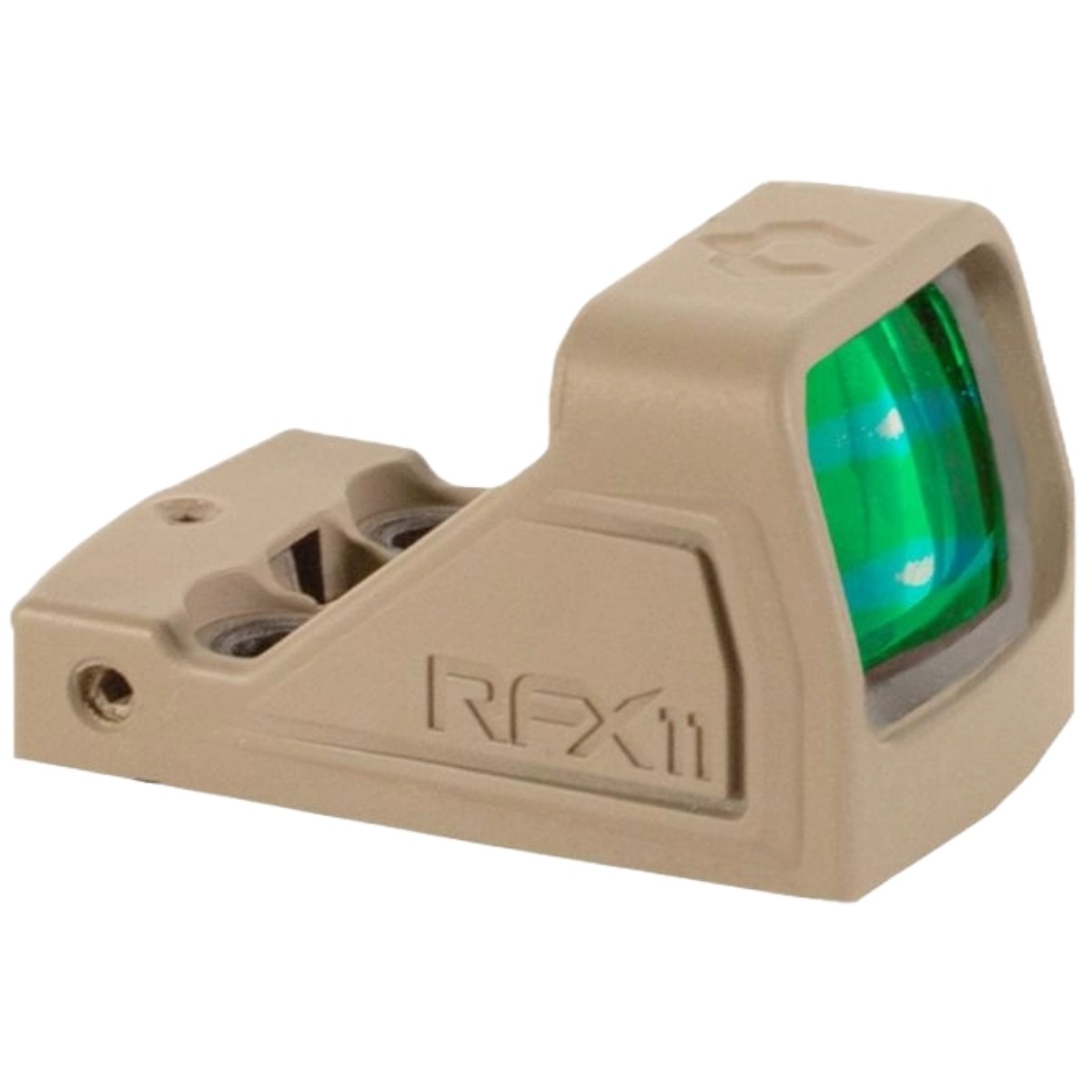

Two little red dots that are affordable and durable are the Viridian RFX11 and Ruger Ready Dot. They both use the RMSc footprint, yet they are nothing alike. One is battery-operated, and the other is a fiber-illuminated pistol sight. There are some benefits of each micro-sized red dot to consider when looking at these two.
Like most optics, your decision will likely come down to features and cost. The Viridian retails for about $100 more than Ruger’s Ready Dot. Handgun-mounted red dots are a given in today’s world, but picking one out is not an easy endeavor. If you want a small, compact optic, there’s a good chance it will have the RMSc footprint. Check the firearm you plan to use, however, and make sure it is compatible with the optic you select.
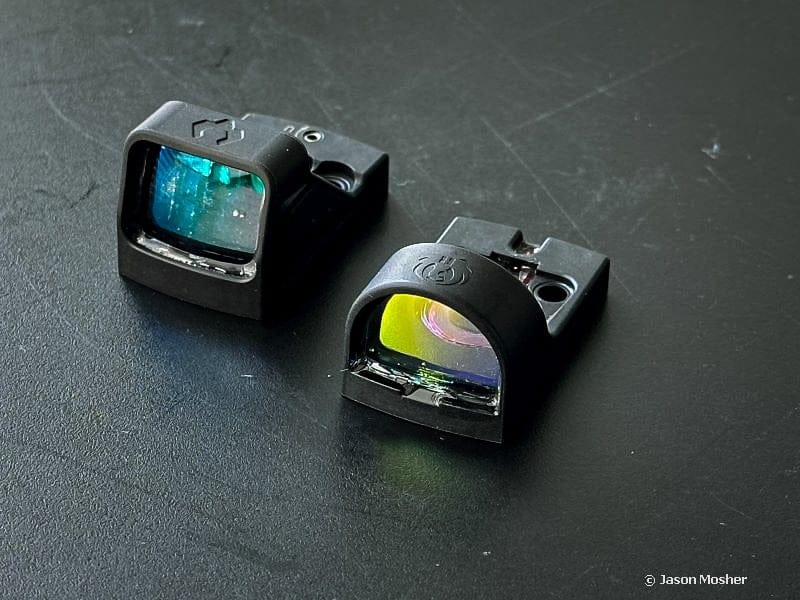
Ruger Ready Dot
Before getting into the details of the Ready Dot, hats off to Ruger for offering something different for us buyers to choose from. I like having lots of choices, and products that are completely different always get my attention. This red dot will get your attention because it doesn’t have a battery, and you can’t adjust the dot. A pre-zeroed optic that doesn’t change is a crazy idea, right?
To be honest, I didn’t realize you can’t zero the Ready Dot until I had already received it in the mail. I’m kind of glad it worked out this way because I wouldn’t have bought it knowing that beforehand. Ruger uses a system of light-gathering fiber optics to portray a ‘dot’ on the glass from ambient light around it. This isn’t a new system, but it’s not common to see on a micro pistol optic.

On the plus side, however, the optic is extremely reliable around any amount of ambient light. There are no electronics, so a battery can’t go dead or an electronic part burns up. You also don’t have to worry about changing that battery once or twice a year. I’ll talk about how well it was zeroed in just a moment.
Viridian RFX11 Green Dot
Known for their green dot optics, Viridian makes some great optics, lights, and lasers for all types of firearms. One of my favorite grip-light combos is their 4LUX CQ grip light. Unlike the Red Dot, the Viridian RFX11 uses a battery-operated 3 MOA dot, which is much smaller than Ruger’s 15 MOA dot. But like Ruger, Viridian also went outside the norm and made their dot a little simpler.
There are no on/off buttons or illumination settings. There are no buttons on the green dot at all. Once you install the battery, the green dot turns on automatically. It uses Viridian’s Auto-on/off feature to save battery life. When the optic has not been moved for two minutes, it will turn off on its own. When it senses movement, it turns back on and is ready to go.

Because there are no illumination controls, the RFX11 uses an automatic brightness control feature. During use, I found it to work somewhat like the Ready Dot, but when you enter a room with no light, the green dot is still visible. I prefer optics that can be set at a specific brightness, but for a CCW-sized optic, this is not as big an issue for me.
How did they compare on the range?
The biggest question I had when heading to the range with the Ruger Ready Dot was the accuracy of a pre-zeroed optic. For clarity, I only set up targets out to 15 yards because this optic is intended for self-defense situations. Most self-defense shootings take place at less than seven yards, so I fired the gun at 15 yards and closer. Even at close distances, I was skeptical of an optic that can’t be zeroed.
The area where I tested the optic was wooded which blocked most of the sun from view. I still had no problems seeing the large red dot and hitting my target. On my first magazine, I was surprised to see a good group hitting close to center. When used for CCW purposes, I think this optic would do fine. The only concern I would have is in low-lit areas where there is no light available to power the optic.
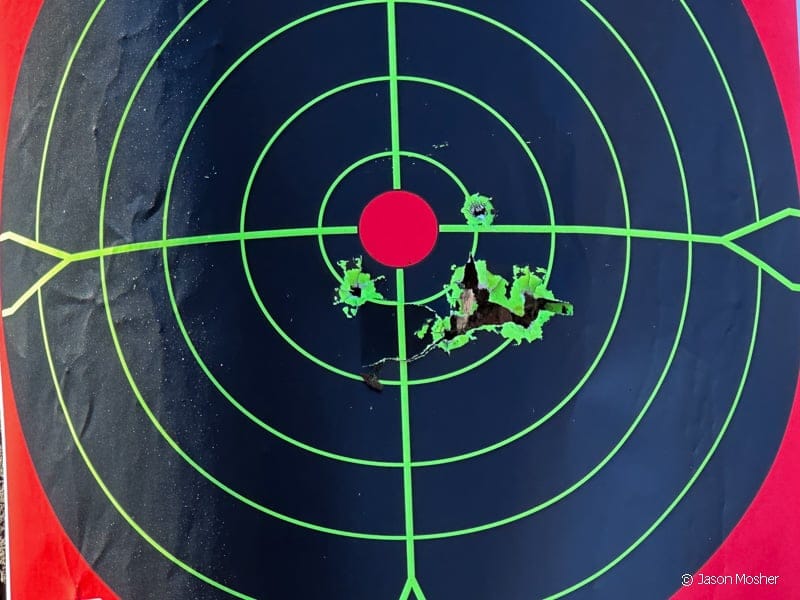
The RFX11 was easy to zero in, and to keep things fair, I shot from the same distance. Once zeroed, I was able to shoot about the same size grouping as I did with the Ruger. Because the dot is smaller on the Viridian, it’s much easier to hit targets further out. I also like green dots because they are easier for me to see.
Decisions, decisions
Both optics stand out from others when it comes to simplicity. The RFX11 offers some advantages with the green dot and having the ability to zero it. On the other hand, you don’t have to do anything with the Read Dot besides mount it to the gun. I prefer the RFX11 slightly over the Ready Dot because I always want the dot available. This is not the case with the Ready Dot in areas with no light.
The RFX11 costs about $100 more than the Ready Dot and requires it to be zeroed. For someone living in a place with limited access to a range, the Ready Dot could be a good choice. Because Ruger made the Ready Dot for the Max-9, I would not hesitate to use them as a pair. Viridians VFX11, however, is a great little optic for any compact handgun or a secondary optic on a rifle. Both are great optics, and either one would be a good choice for your next CCW handgun.