

Bullets have come a long way over the last 70 years. From early lead wadcutters to modern bonded and monolithic hollow points, the once recognizable gap between handgun caliber performance has largely closed. For the most part, bonded hollow points and their variants have dominated the market over the last few decades. Underwood Ammo had other ideas in mind, though, when they partnered with Lehigh Defense to produce their Xtreme Defender line of fluid transfer monolithic (FTM) bullets.
Compared to some companies with a century under their belt, Underwood Ammo is a relatively new entry in the ammunition market. Founded in 2013, Underwood Ammo’s selection and brand recognition have exploded over the last decade. From hard cast to all-copper to traditional hollow point, they offer an impressive rifle and handgun ammo selection. I finally approached them this year to learn more about their offerings — especially the Xtreme Defender line.
Underwood Ammo’s Xtreme lineup includes three FTM projectile designs: the Defender, Penetrator, and Hunter. The Hunter and Penetrator lines offer superior penetration against otherwise resilient wild animals like hogs and bears. Meanwhile, the Defender line revolves around defense from bipedal predators.
I ultimately decided to start out testing a few +P loads from their 9mm Xtreme Defender cartridge line. For this round, I compared the Xtreme Defender’s terminal performance and load consistency to a couple of other established and proven defensive cartridges.
Underwood Ammo Xtreme Defender 9mm
Fluid transfer monolithic (FTM) projectiles don’t expand like traditional hollow points. Unfortunately, some traditionalists prejudicially dismiss them in favor of hollow points. Personally, I try to shy away from the collective hype at the next greatest thing, as well as dogmatic adherence to tradition. I’d much rather borrow a page from Einstein and apply a “passionate curiosity” towards the new and old.
While I covered FTM projectile design and performance in detail in a previous article, it’s worth a brief review for those unfamiliar with the mechanics of these projectiles. To start, “monolithic” refers to the projectile’s solid copper construction. “Fluid transfer” refers to how the projectile produces terminal performance. Unlike traditional hollow point bullets, fluid transfer projectiles utilize the projectile’s rotation to produce a permanent wound cavity.
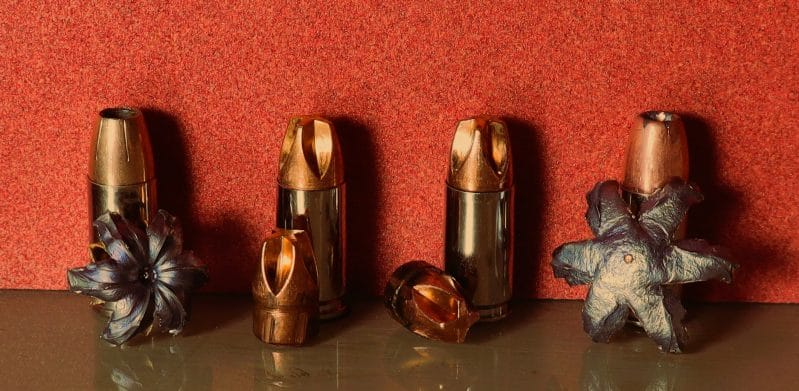
The Contenders
Over the years, several 9mm loadings have proven to be reliable defensive cartridges. With plenty to choose from, it’s hard to narrow them down for comparison against Underwood Ammo’s Xtreme Defender line. While brevity isn’t my strong suit, I at least narrowed things down to a couple of popular law enforcement and personal defense cartridges.
Speer Gold Dot 9mm 124-grain +P
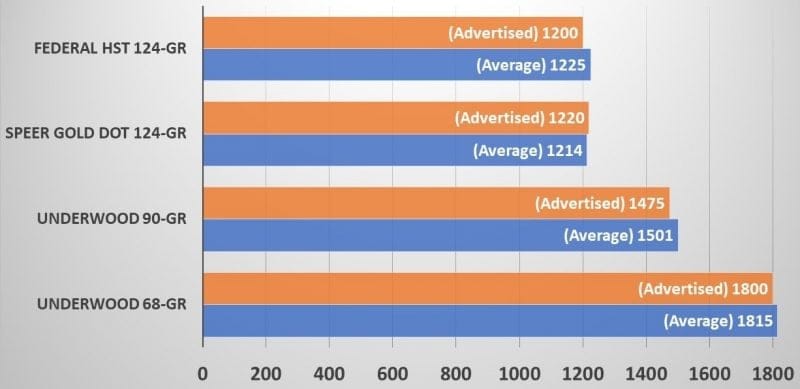
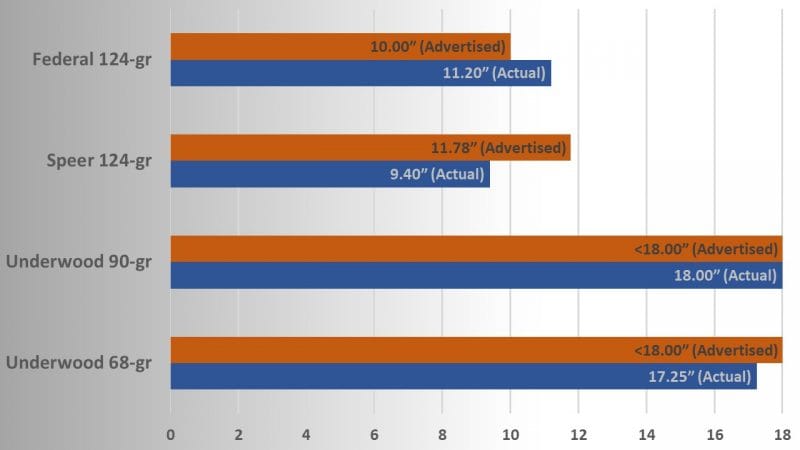
Speer Gold Dot is a well-established defensive ammunition with a proven track record. The bonded lead core and copper jacket provide reliable and consistent expansion through barriers. Speer’s advertised muzzle velocity sits at 1,220 feet per second (fps) from a 4-inch barrel, penetrating 11.78 inches of bare ballistic gelatin.
Federal HST 9mm 124-grain +P
Federal HST is another proven performer that is widely used in law enforcement and personal defense. HST also features a bonded lead core with a copper jacket. With an advertised muzzle velocity of 1,260 fps, Federal states HST will penetrate 10 inches of bare ballistic gelatin.
Underwood Ammo Xtreme Defender 9mm 90-grain +P
This offering from Underwood Ammo utilizes a non-expanding 90-grain solid copper projectile. Underwood pushes this round’s lighter weight to an advertised velocity of 1,475 fps. The bullet design and high velocity achieve a reported 18 inches of penetration in bare ballistic gelatin with double the permanent wound cavity width of traditional hollow point cartridges.
Underwood Ammo Xtreme Defender 9mm 68-grain +P
While some might expect less performance from a lighter cartridge, this 68-grain loading from Underwood Ammo reports similar performance as the 90-grain in bare ballistic gelatin. With an advertised velocity of a blistering 1,800 fps, Underwood claims this load generates less recoil without sacrificing performance.
Bare Gelatin: Underwood Ammo vs Hollow Points
This comparison focused on 9mm +P performance in bare ballistic gelatin between Underwood Ammo’s Xtreme Defender line, Speer Gold Dot, and Federal HST. Three shots of each cartridge were fired from 10 feet away into Knox ballistic gelatin blocks. The gelatin blocks were refrigerated at 39° F and calibrated pursuant to FBI standards prior to testing. A ProChrono Digital chronograph obtained velocities directly in front of the gelatin blocks.
While this test’s data is relatively succinct and straightforward, performing gelatin tests at home requires a lot of preparation, work, and review. As such, future articles will include FBI barrier penetration testing through mediums like steel, drywall, wood, and glass. For now, I kept testing relatively simple for this introduction to Underwood Ammo’s Xtreme Defender cartridge.
Advertised vs Achieved Velocity
Over the years, I’ve come to expect manufacturer-advertised velocities won’t always match those achieved at home. However, all but one of the tested cartridges exceeded the advertised velocities. The advertised velocities for most of these loadings were obtained from a 4-inch barrel. Since this test used a Glock 17 with a 4.5-inch barrel, it’s no surprise velocities were a little higher than advertised.
Advertised vs Achieved Penetration
I’ll be the first to admit my ballistic gelatin setup isn’t comparable to those backed by a seven-figure budget. Nonetheless, I follow FBI standards as closely as possible to maintain a consistent standard across all cartridges. During my early recipe development, the gelatin blocks were properly calibrated within FBI standards, and testing of Hornady Critical Duty and Underwood Ammo Xtreme Defender almost perfectly mirrored advertised results in similar ballistic mediums. At a minimum, these results were obtained on a level playing field with the same conditions, gelatin composition, and calibration.


Permanent Wound Channel
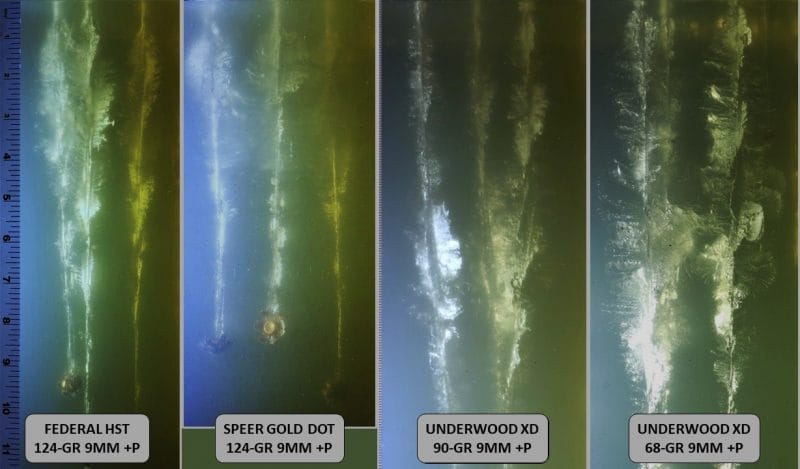
When a bullet hits an intended target, the projectile creates two types of wound cavities: temporary and permanent. Temporary wound channels appear spectacular with the aid of a slow-motion camera. However, the permanent wound channel (PWC), which represents lasting trauma from the projectile, is historically the more accurate measure of a cartridge’s mythical “stopping power.”
The Future of Defensive Projectiles
Fluid transfer monolithic projectiles represent a radical paradigm shift in defensive cartridge design. While many gimmicky rounds have come and gone, Underwood’s Xtreme Defender cartridge line has shown obvious performance advantages far from any kind of gimmick. I’m genuinely excited to see how these rounds perform in later testing against barriers compared to traditional, proven hollow point cartridges. I have my educated conclusions, but I’d prefer to remain impartial until publishing the final results here.
Underwood Xtreme Defender 9mm +P is competitively priced at around $1.25 per round. If you don’t believe the performance I’ve seen from these rounds, they’re priced reasonably enough for you to grab a box and try some yourself. I have a feeling you’ll be just as impressed as I was.
Shop This Article
-
Federal Premium Personal Defense Hydra-Shok 9mm Luger Ammo 124gr JHP 20 Rounds
 $34.99$22.99Save $12.00
 -
Hornady American Gunner 9mm Luger +P Ammo 124gr XTP Hollow Point 25 Rounds
$27.99$17.99Save $10.00


