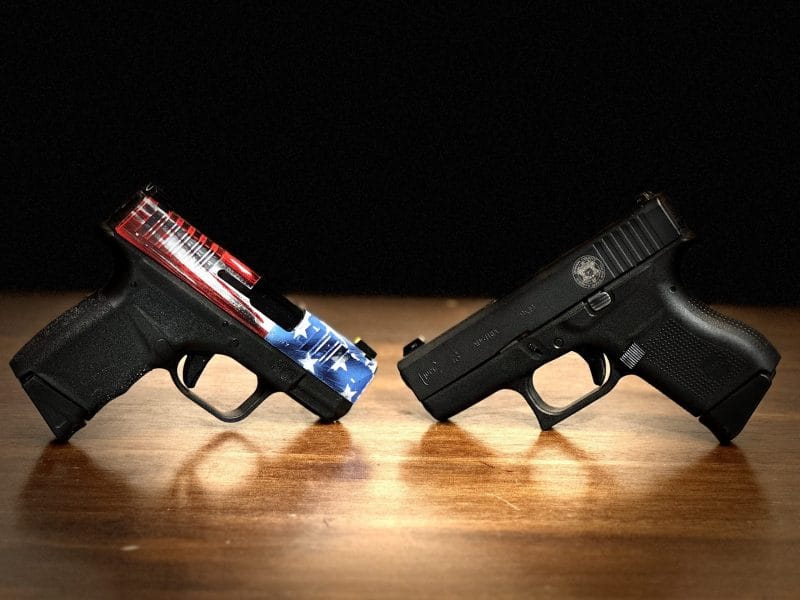

Glock has been making compact guns for a long time. They are short bulky little things that some love and others hate. I am a hater, but that’s just personal preference. I don’t like how bulky they are, and if I am going to carry a gun that has the width of a full-size model. I’ll just carry a full-size model.
Glock’s 1st real move into the CCW market came with the introduction of the Glock 43. A slim, compact 9mm gun that was easy to carry concealed and functioned just like all the other Glocks. It was a big improvement for Glock when it comes to compact guns that can be concealed. I purchased a 43 and started carrying it everywhere I went off-duty. The agency I work for even issued them out to every road deputy as an off-duty weapon. The only downside is the capacity.
Springfield has the XD line of guns and did somewhat the same thing as Glock, compact versions that are still on the bulky side. Their big breakthrough into the CCW market (in my opinion) is the Hellcat micro-compact series of guns. They look like a cousin to the XD, but aren’t as top-heavy. I also own a Hellcat and carry it regularly. Springfield was quick to extend this line into a series with plenty of options to pick from. Both companies continue to develop more models but today we are going to look at the Glock 43 and Springfield’s Hellcat Micro Compact.
Glock 43
One of the best guns Glock has produced for CCW is the model 43. It’s slim and compact but still large enough to get a decent grip on. On the range, I can shoot the 43 about as quickly and accurately as my Glock 19. The trick with concealed carry guns is finding that magic size that is large enough for good control and ammo capacity but small enough to conceal. Glock excels at making the 43 compact 9mm while still carrying the same quality and reliability as the larger Glock models.
The biggest downside to the model 43 is the ammo capacity. The box model comes with a 6-round mag, but aftermarket mags can be found that hold nine with a grip extender. ETS makes a 12-round mag, but with the length, it works better as a secondary mag. The frame on the 43 is nearly identical to the larger models, just shrunk down. The mag release, grip surface, and trigger all feel comfortable and familiar when shooting.
Glock 43 Specs
- Barrel Length: 3.5”
- Weight 17.99 (with empty mag)
- Magazine Capacity 6
- Overall Length: 6.26”
- Width: 0.92”
Shop This Article
-
Shield Arms Z9 9mm 9-Round Magazine Kit for Glock 43 Pistols w/ Mag Release - 1 Pack
 $60.00$38.99Save $21.01


Hellcat Micro Compact
Springfield hit a home run with the Hellcat series and gave Glock a run for their money. I personally don’t care for the XD line of guns but was thrilled to see the Hellcat series when it was released.
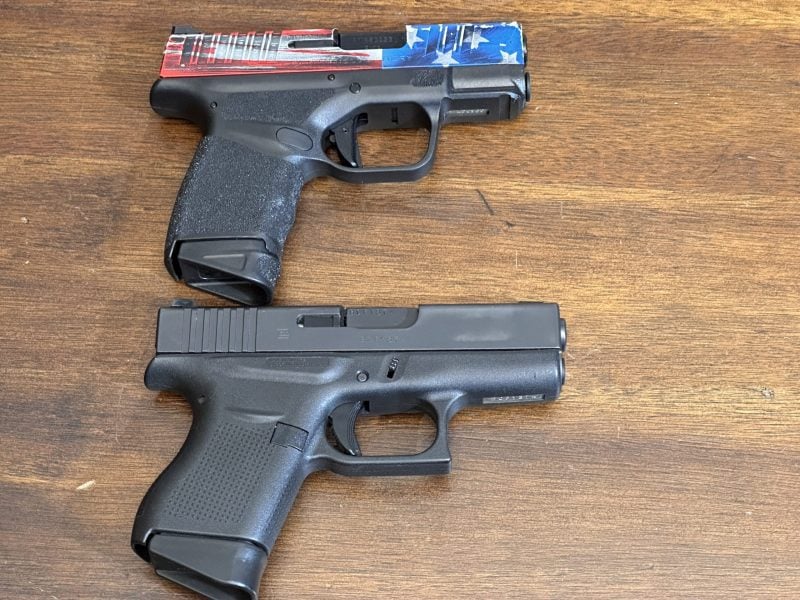
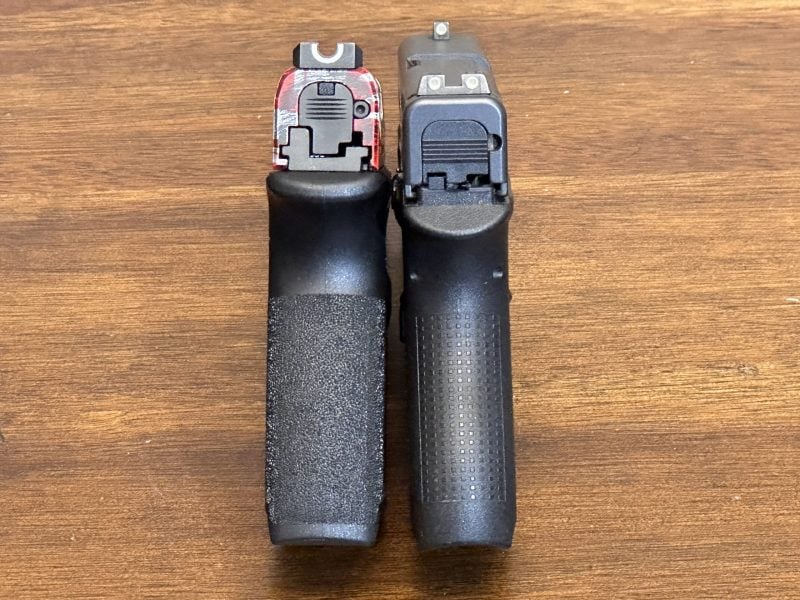
Like the Glock 43, the Hellcat is a compact striker-fired 9mm handgun. The most notable difference from the Glock 43 is the Hellcat uses a double-stack mag. This of course makes the Hellcat just a little thicker but not enough to really notice a difference when carrying. It can hold 11 rounds with a flush-fitting magazine and 13 rounds with an extended magazine.
Hellcat Micro Compact Specs
- Barrel Length: 3”
- Weight: 18.3 oz (with empty mag)
- Magazine Capacity: 11 rounds (13 with extender)
- Overall Length: 6”
- Width: 1”
Accessories
Both models have a lot of accessories available, and both can look cool when they are equipped with a miniature reflex sight, compensator, trigger upgrade, etc. Glock normally wins the war on accessories, but Springfield has really shined when it comes to getting the Hellcat brand out there.
Most stores that sell after-market triggers, mags, and other accessories for the Glock 43 will also have accessories for the Hellcat. When buying holsters for the 43 and Hellcat, I had no trouble finding multiple options for both. Extra mags for the Hellcat run $30-$40 but for the Glock 43 only $25-ish. There are more aftermarket mags available for the Glock 43 than for the Hellcat.

Price vs Reliability
When it comes to reliability, both models win gold. Over the years, I have fired a wide range of FMJ and hollow point ammo through each model and have never had any malfunctions. At 20 yards I shoot the same with both and at 30 yards and beyond, I shoot better with the Hellcat. This of course is not a reflection on the accuracy of the Glock, it’s just what I shoot better with. I would feel completely confident with either weapon during a self-defense incident.
When it comes to price, these two copper eaters are not as equal. The Glock 43 averages $450 at retailers while the Hellcat ranges from $530-$600 depending on the model and finish. With a lower price point, Glock would win the price vs reliability contest any day. One of the many things Glock has perfected is its ability to produce the most reliable guns on the planet at one of the most competitive prices.
Which one is better?
Selecting which one of these models is better is not just hard, it’s also subjective. They are both reliable and compact, so it depends on what features someone likes more.
For me, the Hellcat wins over the Glock 43. This is mostly because of the magazine capacity. Hellcat mags may cost more, but they also hold almost twice as many rounds. I personally like the looks of the Hellcat more than the Glock 43. I’m not trying to upset the Glock groupies, but I think they’re ugly. Glocks are great and I carry one on duty every day, but they’re still ugly!
I can’t tell a noticeable difference in thickness when carrying both models. On the range, I shoot well with each one, but I must reload more often with the Glock. Both models use a double recoil spring making them comfortable to shoot. I like the trigger a little better on the Glock and the sights better on the Hellcat. This will bring it down to personal preference although I will keep harping on the ammo capacity. This is what led Glock to produce the 43X, but that battle is for a later time.