

The shotgun offers something that many firearms cannot: a versatile load selection that is highly adaptable to different shooting applications. If chosen correctly, a single shotgun can serve in hunting, competitive, and defensive roles simply by changing your ammo.
By firing multiple pellets in a single round, shotgun ammo spreads as it travels for greater coverage on the target. This creates a pattern that you can use to help enhance your accuracy. But not all loads are created equal. In fact, they often exhibit distinct differences that tailor them to specific tasks. However, before we look at the different shotgun loads, it’s important to cover how the modern shotgun shell was created.

History and Development of Shotgun Ammo
The original shotshell design was made entirely of brass, dating back to the early 1860s. This was a welcome advancement from muzzleloading firearms, allowing for better moisture resistance, faster reloads, and easier operation. These brass shotshells could be reloaded several times, and hunters could carry around multiple fairly easily.
However, these brass rounds were costly to make, so by the 1870s, companies began using waxed paper for the shotshell hull. These new paper shotshells were much lighter weight, allowing shooters to carry more ammunition. Paper rounds still incorporate a brass base to help seal the action and support the primer. Additionally, the paper is waxed to prevent degradation from moisture.
Paper shotshells served for decades, even through the transition to smokeless powder. It wasn’t until relatively recently, around 1960, when the swap to plastic hulls took place. Even with the waxing process, paper hulls had issues in moist environments, leading Remington to experiment with plastic. These were found to be much more water resistant, and they could even be reloaded multiple times.
Modern plastic shells were quicker and easier to make, and shooters found that plastic was capable of handling heavier loads, extending their firearm’s effective range. Plastic shotshells seemingly provide the benefits of both its predecessors, however, there’s one major drawback: environmental impact. Because plastic shells are less expensive than brass, many shooters will not find it advantageous to reload their own ammo.
This means many shooters do not worry about picking up their spent rounds. But plastic takes a much longer time to biodegrade than paper, and with irresponsible shooters refusing to pick up and properly dispose of their spent loads, trash has accumulated in otherwise unsoiled locations. This has led some areas to restrict or prohibit the use of plastic hulls for hunting.
What Is Shotgun Gauge?
Shotgun gauge is used to measure the diameter of a shotgun’s bore. Gauge equals the number of lead balls the size of the bore it would take to equal one pound. So, the popular 12 gauge shotgun states that it would take 12 balls the size of the bore to weigh one pound. Therefore, the fewer balls it would take, the larger the size (i.e., a 20 gauge shotgun is actually smaller than a 12 gauge).

Common gauge measurements you’ll see are 10, 12, 16, 20, and 28 gauge. Another number you’ll often see is .410 Bore. This is the smallest option, and the number refers to the shotgun’s caliber rather than a gauge size. A .410 Bore shotgun features a bore that measures .410 of an inch.
Although there will be some variances in load selection, the larger the gauge (or smaller the number), the more power a shotgun will have. More power also results in greater recoil and a louder report. Larger shotguns will also deliver a heavier and denser payload than comparable loads in smaller shotguns. A 12 gauge can fit more shot into a shell than a 20, for instance. These are some factors to consider when selecting your shotgun.
Shot Size
A shell’s “shot” size refers to the size of the pellet projectiles used. There are three main categories you’ll find — birdshot, buckshot, and slugs — with specific numbers further differentiating the size. The lower the number, the larger the pellet.
Birdshot loads consist of a large number of small pellets that favors pattern density over individual shot size due to the relatively small size of the target it’s intended for. Dove, pheasant, quail, duck, and geese are all game for birdshot. Birdshot is also popular for sport shooting in trap and skeet, where clay projectiles are the target.
Birdshot can range from #12 shot (smallest) to #1 and B, BB, and BBB (all incrementally increasing in size). There’s also T, TT, TT/F, and FF birdshot that are a bit larger, but are less common, typically geared toward waterfowl and turkey.
Buckshot is larger shot engineered to take down medium to large game. It’s also a solid choice for defensive applications. Buckshot is commonly found between #4 and #000 sizes. The larger, heavier pellets deliver more power and deeper penetration for increased terminal performance. From hunting deer, elk, and hog to bear defense, buckshot is an effective fight-stopper.

Unlike birdshot and buckshot, slugs utilize a single projectile that’s much larger and heavier. This makes it a good choice for hunting large game and defense against dangerous predators. The slug hits hard and creates a massive wound channel with a ton of tissue damage. Slugs can be rifled to create a spin inside the barrel similar to a rifle for greater accuracy at longer ranges.
| Shot Type: | Size Range: | Best Uses: |
|---|---|---|
| Buckshot | #4 to 0, 00, 000 | Deer, hog, bear, other large game, self-defense |
| Birdshot | #12 to BBB, T, F | Dove, waterfowl, turkey, pheasant, other small game |
| Slugs | .410 Bore to 10 Gauge | Deer, bear, boar, self-defense |
Notably, there are some shotshells that will come with duplex, or double-stack, payloads, which consist of different shot sizes combined into one load. The intent is usually to create a blend that offers a good balance of pattern density and shot size for improved knockdown power.
The exact amount of shot in your shotshell will be determined by the gauge, as well as the weight of the payload (1oz, 1 1/4oz, etc.) and shell length (2¾“, 3”, etc.). Composition of the load also comes into play. Copper, steel, lead, and tungsten are all options with different densities, which will affect the size of individual pellets.
Self-Defense with a Shotgun
A shotgun can be an incredibly effective tool for self-defense, but whether using a shotgun for defense is a good move will largely depend on the shooter and environment. Depending on the gauge, shotguns can produce quite a bit of recoil, which will need to be managed for effective employment. Overpenetration is also a concern for those living in dense urban areas.
If you do choose a shotgun for defense, load selection is key to achieving your desired results. Buckshot is your best bet, as the larger pellets offer the required power and penetration to reliably stop an attacker. For two-legged assailants, #4 buck provides a good balance of power and spread, with minimal overpenetration concerns. Larger 00 buck is also a classic choice for ultimate stopping power, but recoil tends to be harsh, especially in 12 gauge. Birdshot does not produce enough power to consistently stop a threat.
The type of shotgun you use is also important. Semi-auto shotguns provide fast follow-up shots, and modern examples tend to be plenty reliable. However, this reliability can depend on the load you’re using. Pump-actions are known for rock-solid reliability, but this is only the case with a practiced shooter who knows how to properly work the action. Short-stroking the pump can cause jams and hang-ups.
Load Selection
1. Hornady Critical Defense 12 Gauge 2.75-inch 00 Buckshot
Features:
- Eight 00 Buck pellets
- 1,600 fps muzzle velocity
- One-piece plastic wad
- Premium propellant and components

2. Federal Shorty 12 Gauge 1.75-inch #4 Buckshot
Features:
- 15 #4 Buck pellets
- 1,200 fps muzzle velocity
- Low-brass base
- Short 1.75” shells for max capacity

3. ATI .410 Bore 2.5-inch 1/3oz BBB Buckshot
Features:
- 12 BBB Buck pellets
- 1,400 fps muzzle velocity
- Premium plastic hull
- Manageable recoil

Hunting with a Shotgun
One of the primary uses of shotguns is for hunting. Capable of taking any type of game depending on your load selection, the shotgun is an incredibly versatile hunting tool. Everything from as small as a dove to as large as an elk has been taken with some variety of shotgun. There is no other firearm as configurable as a 12 gauge shotgun.
Upland birds such as pheasant are commonly taken with #4, 5, and 6 shot. Smaller, faster-moving birds like dove and quail tend to require a wider spread for effective hits, so #7, 7.5, and 8 shot are good choices. Waterfowl is a bit larger, so #1, 2, 3, or BB shot can be a better selection, as well as T-TTT, B-BBB, and F-FF for turkey.
Buckshot derives its name from its utility on large buck. Deer of all sizes are a common target. Even larger elk and moose can be taken cleanly with proper shot placement. The larger the game, the closer your effective range needs to be. Heavy loads in a 12 gauge or 10 gauge are necessary, with slugs being a common preference.
Feral hog, boar, and bear will also fall to a stout load of buckshot. The main consideration in hunting with a shotgun will be how close you can get to your prey, not the sufficient power of the firearm.
Load Selection
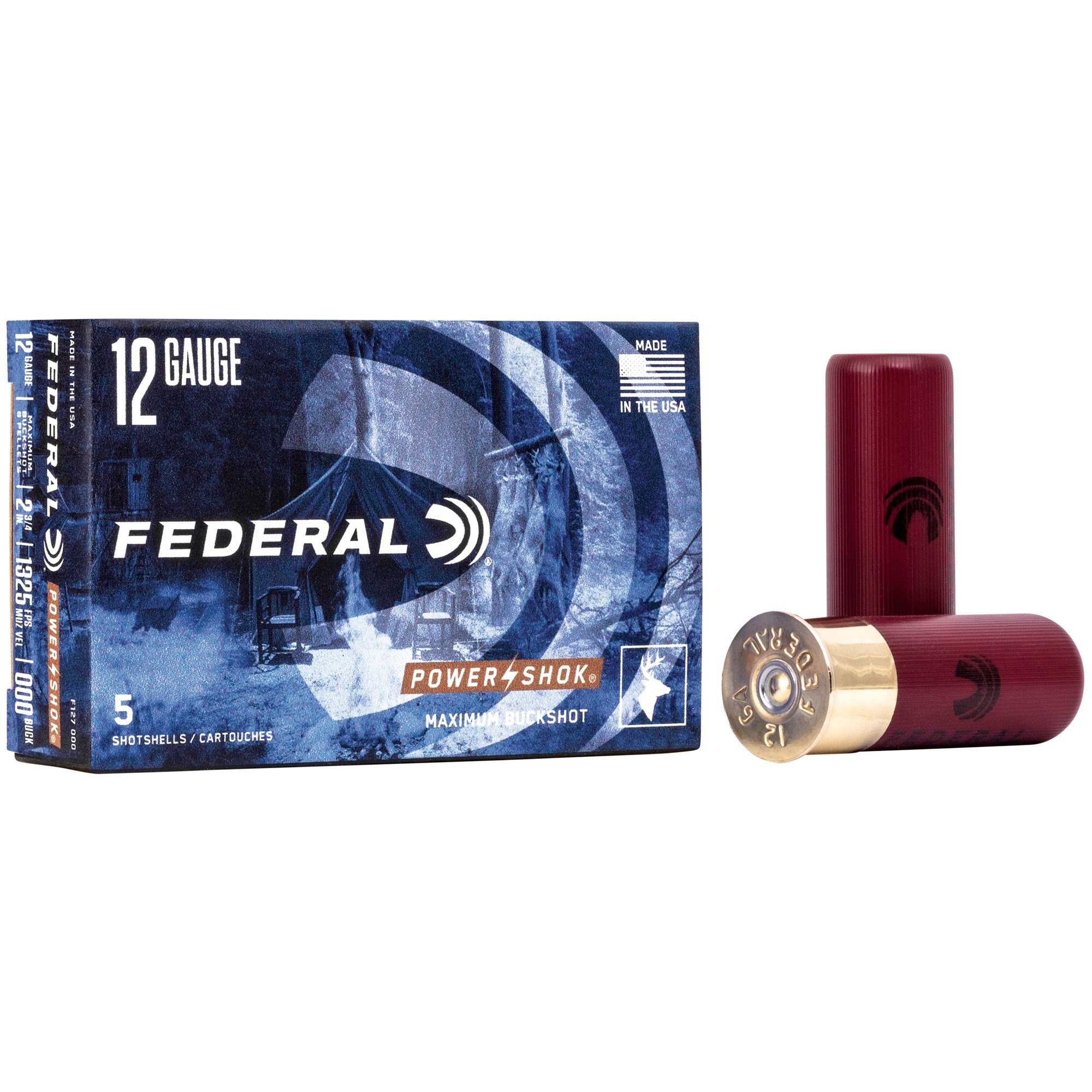
1. Federal Power-Shok Maximum 12 Gauge 2.75-inch 000 Buckshot
Features:
- Eight 000 Buck pellets
- 1,325 fps muzzle velocity
- High-brass base
- Triple Plus wad system
2. Kent Cartridge Fasteel+ 20 Gauge 3-inch 1oz #4 and #6 Shot
Features:
- Layered #4 and #6 shot
- Precision plated steel shot
- 1,350 fps muzzle velocity
- Designed for tighter patterns

3. Rio Shotshells Texas Game Load 12 Gauge 2.75-inch 1 1/4oz #7.5 Shot
Features:
- #7.5 lead shot for dove
- 1,260 fps muzzle velocity
- High-brass base
- Low-recoil propellant

Target Shooting with a Shotgun
Shotguns are incredibly popular in the sport shooting arena. From classic events such as trap and skeet to modern 3-gun and multi-gun competitions, shooters around the globe are running shotguns. For most of these, a longer barrel will serve you better due to the increased accuracy and more even balance. Everything from classic over/unders to modern semi-autos all have their place.
#7.5 to #10 birdshot is often designed for clay targets. The smaller shot size offers minimal recoil for fast follow-up shots and a dense pattern for ample coverage. Anything larger than #6 shot is typically prohibited, though some 3-gun events may specify use of buckshot or slugs for certain stages.
Be sure to pattern your loads, as barrel length, choke type, and ammo selection will all deliver different results at varying distances. Check regulations for your specific competition, as some will restrict you to lead shot only or only certain shot sizes.
Load Selection
1. Estate Cartridge Company Super Sport Competition 12 Gauge 2.75-inch #8 Shot
Features:
- 1oz #8 shot payload
- 1,290 fps muzzle velocity
- Quality plastic wad
- Low-brass base

2. Fiocchi Shooting Dynamics 12 Gauge 2.75-inch 7/8oz #7.5 Shot
Features:
- 7/8oz #7.5 shot payload
- 1,350 fps muzzle velocity
- Premium components
- Low-brass base

3. Kent Cartridge Elite Steel Target 20 Gauge 2.75-inch 7/8oz #7 Shot
Features:
- Precision, zinc-plated steel shot
- Nickel-plated head
- HD hull
- 1,215 fps muzzle velocity

Final Thoughts: Shotgun Ammo
With no shortage of ammunition options, a shotgun just may be the single best firearm you can own. From hunting all manner of game to competition shooting and personal protection, a good shotgun can serve you well. However, care must be taken in choosing your load to receive the best results. But with proper ammo, a solid shotgun will never let you down.
How do you use your shotgun? What’s some of your favorite shotgun ammo? Share your thoughts in the comments.
