
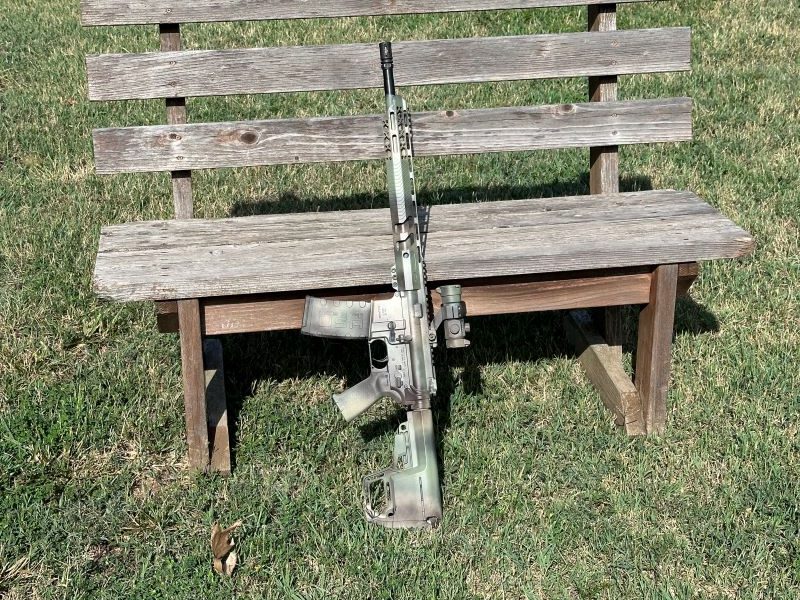
I was beyond belief the first time I saw a buddy’s gun that had been spray painted. It wasn’t an old junk gun that he was playing around with, it was a Daniel Defense he just purchased. I knew he was buying a new AR-15 and wanted to see it. Before I could see the new gun, he already had it hanging up in his garage by a wire, covered in spray paint.
My first thought was okay, it’s happened; he snapped. I asked him why on earth he would want to spray paint his most expensive rifle. His response was, “Why would I mess with painting a cheap rifle?” I had only known this guy for a couple of years, and he was older than me. He was a Vietnam vet who saw combat during two separate deployments and went on to join a special forces unit after the war.
Why spray paint a gun?
Half of gun lovers say never spray paint a gun and the other half say go for it. So, for a moment, let’s focus on the half that says go for it. There are multiple reasons someone may want to paint their gun. Here are some of the most common reasons people spray paint their guns.
It can blend into the environment.
The first and most common reason is to make it blend into the environment. Hunting is one of the most common needs for adapting a gun to the area around you. If you travel a lot and want to set up your gun and gear to blend in with a specific environment, this is a good way to do it.
It’s easy to do, cheap, and fast.
Not everyone wants to spend a lot of money to have a permanent paint job put on their gun. Spray paint isn’t permanent, which we will talk more about shortly. But if you need or want to change the look of your gun on a regular basis, a permanent finish is not ideal.
Spray paint is a few dollars per can, and you can find just about any color you want. If you don’t like the color, just paint it again. For those who want to adapt as they go, spray paint is the most helpful form of camouflage. It’s fast and easy to find.
It’s not a permanent paint job.
A good finish on a gun is durable and long-lasting. Cerakote and other types of finishes are known for being tough. This is good if you want that nice finish that will last a lifetime. But not if you want to strip it back off. Spray paint is nothing as close to a durable finish as professional-grade finishes on guns. Some of the anti-paint guys will point this out. But for those on the pro-paint side of the argument, that is the point. Spray paint is not supposed to be a permanent finish. It’s a camo that can be modified, completely changed, or removed. With a few common cleaning tools and solvents, a spray-painted rifle can be stripped back down to the factory finish.
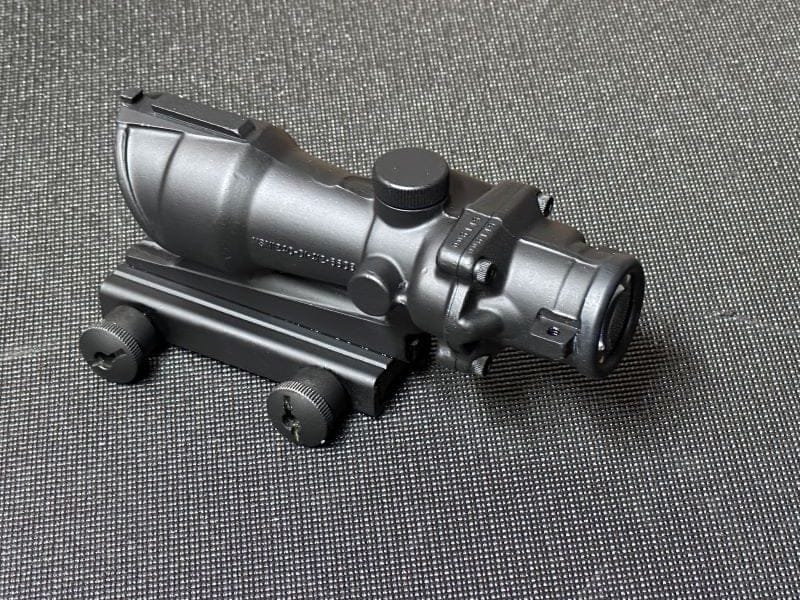
Keep in mind that some plastic parts on a gun will not clean as easily or come off at all. But any metal part of the gun can be cleaned up without much effort. I recently removed spray paint from an ACOG which I will talk about in Part Two of this article.
How do you spray paint a rifle?
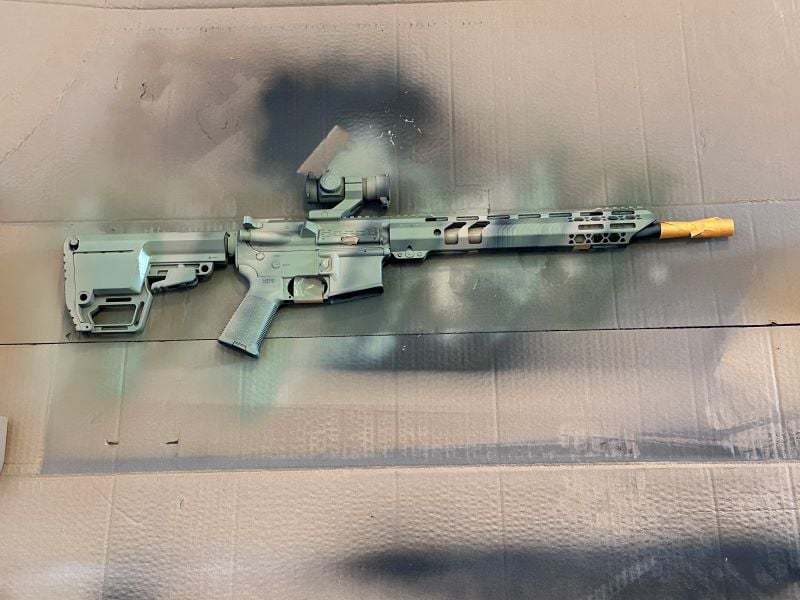
This is another area that is up for debate. Everyone has their own opinions, methods, and reasons. So, I say paint it how you want, it’s your rifle. Some guys like to spread grass or leaves over their gun to give it that natural camo look. Others use netting or other materials with designs to break up the pattern.
There isn’t a right or wrong way when you’re using spray paint. The idea is to blend in around you. If you live in the desert, a solid tan or FDE color may work just fine. If you live in an area with lots of trees, a brown, tan, and green finish may be what you want. You can get creative if you want, or you can keep it simple and give it a quick paint job.
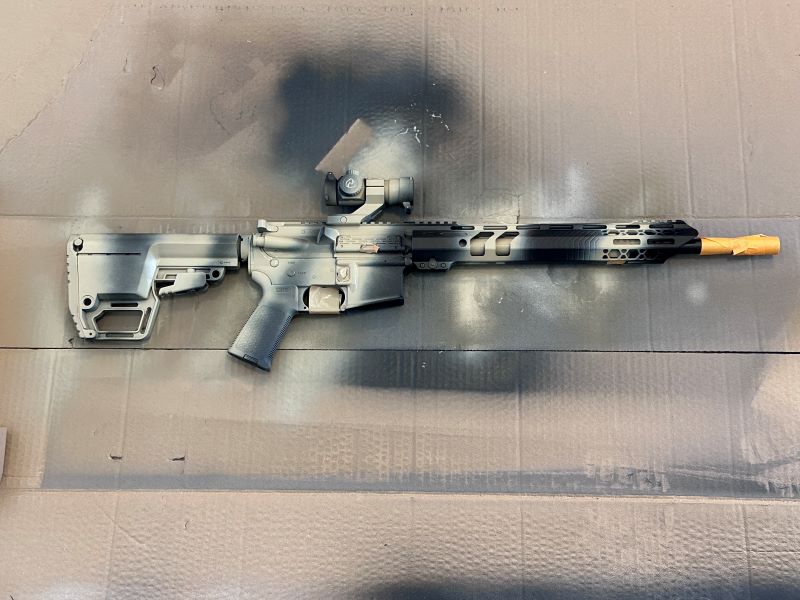
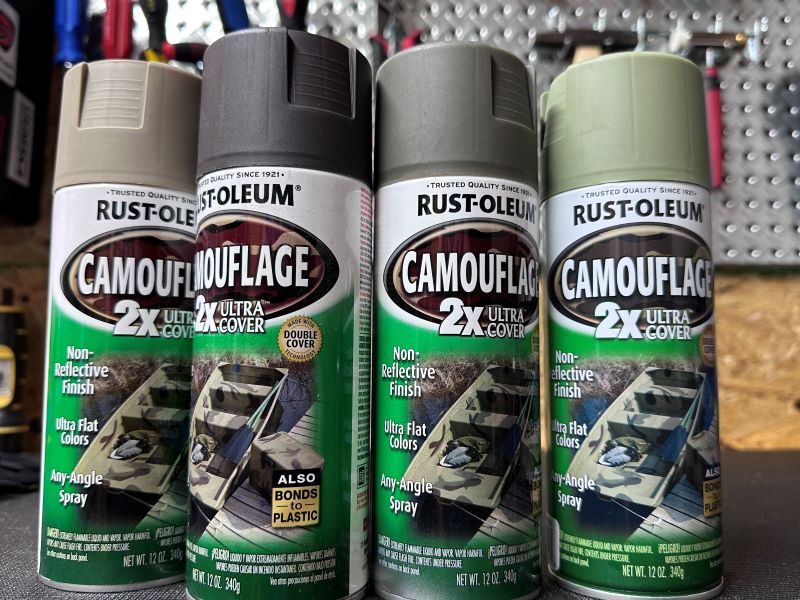
Painter’s tape works great for this, but you can use just about any kind of tape. The kind of paint used is another hot topic. I have used all kinds of paint. Again, this isn’t supposed to be a professional finish; it’s camouflage. If the paint fades and scratches, great. That just helps it blend in even more. Make sure to clean the gun and remove any dirt and oil before starting. A primer isn’t needed because this isn’t a permanent paint job.
Should you paint the accessories too?
One thing you want to consider when painting accessories is the guns they are used on. If you have a quick detach system for your light and use it on multiple guns, you may not want to paint it. But if you are leaving an attachment on that gun and don’t plan to use it anywhere else, then paint it.
If you are going for that “cool” look then you may want to put more thought into this. But if your only goal is to make your gun camo, every part does not have to be painted the same. I cover the trigger area on my gun, so paint doesn’t make its way up into the trigger assembly. I’m also not concerned about the trigger being a solid color because it’s a small part of the gun. If you want to spray paint your gun, experiment on some other items first and find the look you want.
Planning to spray paint your gun?
Spray-painting a gun isn’t for everyone and there’s nothing wrong with that. I know people that say never do it, but I think it’s up to you. I also know guys who say you should paint every gun you own, and I don’t agree with that either. Painting a gun could reduce the gun’s value for resale, so keep that in mind.
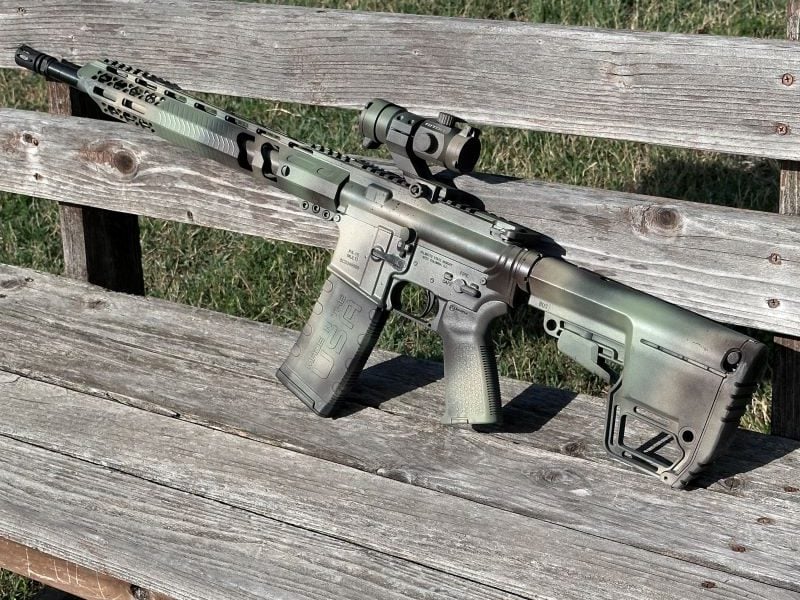
Get some tips from others, but in the end, make your rifle look however you want. Keep in mind the serial number cannot be covered to the point that it is not readable. Other than that, painting a gun can be fun and has its uses. If you paint yours and decide you really want it back the way it was, the paint can be removed (in most cases).
Removing Spray Paint
There may be times when you decide to remove the paint from a rifle. Maybe you purchased a different optic and plan to sell your old one. A lot of people do not paint guns or clean the paint off them. This could make your spray-painted optic worth less in their eyes. This goes the same for the rifle, too.
I have stripped paint off rifles before, but my newest project was a 4X32 ACOG that was spray painted. I wanted it to be flat black, so I stripped it down and then applied a light coat of paint back on it. The result was an almost new-looking optic for my rifle. Today, I will cover the process of stripping the paint off the ACOG, which is the same process as a rifle. Let’s get started.
What is needed to remove spray paint?
- Paint remover (solvent, paint thinner, mineral spirits, etc.)
- Nylon gloves
- Nylon brush
- Plastic scraper
- Scotch Bright pad
- Paper towels
- Work rag
- Cardboard (for a work area)
You don’t need very many tools to strip the paint from a gun, optic, or other accessories. For this ACOG, I used Hoppe’s NO.9 Gun Bore Cleaner. Most gun solvents, paint thinners, mineral spirits, or even brake cleaners will work for removing spray paint. Just be mindful that some cleaners can damage the factory finish of a gun if left for too long.
I would recommend wearing gloves to keep the cleaner and paint mixture off your hands. I used a solvent because I already had a big bottle on my workbench. A nylon brush, plastic pick/scraper, and a piece of Scotch Bright scratch pad will be needed too.
I used a stainless-steel brush and scraper on some areas of the optic. Use extreme caution with a steel brush or scraper, however, as it can scratch the gun or optic. An old rag and some paper towels will help wipe off the paint as you clean. Wherever you plan to clean the gun or gun part, I would lay down cardboard so it can be thrown away. The cleaner and paint mixture will get everywhere, so it’s easier to let the cardboard soak it all up and throw it away when you’re done. Use a ventilated area and have plenty of light before you start.
Getting Started
Some types of chemicals used for stripping paint could damage plastic, rubber gaskets, glass, or other parts of a gun, optic, or light. Tape off any area that does not have paint needing to be stripped. I taped off the glass on the ACOG with painter’s tape. I also made sure the caps for the battery, windage, and elevation adjustments were snug.
If you are stripping paint from a rifle, you don’t have to take it apart, but it may be easier. It has been a while since I stripped the paint off my last rifle, but I took it completely apart. This allowed me to work on the upper and lower receivers separately. I replaced any small parts that were hard to clean.

Apply the cleaner. Brush, wipe, and repeat.
Once you are certain the cleaner will remove the paint and not damage the gun or optic, you can work in larger areas. For my ACOG, I started on one side and applied the solvent to the entire side of the optic so it could soak.
With the brush, I worked one small area at a time. Once the solvent started looking the same color as the paint, I wiped it off and dipped my brush in the solvent before scrubbing again. I found this process worked best for me. The solvent only wanted to take off one layer of paint at a time. I repeated the cleaning process twice in one area before seeing the factory finish. Once I made it to the factory finish, I moved over a little and continued with the same process.
Finishing Up
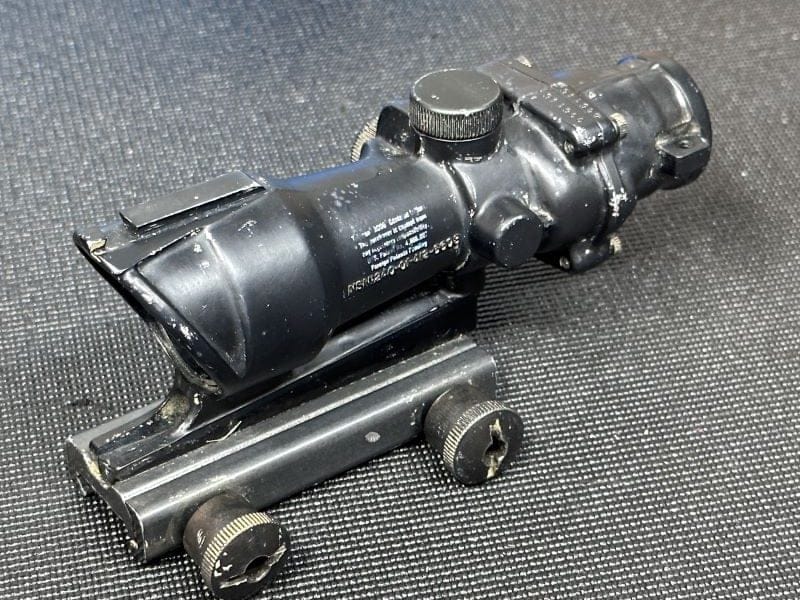
Once I had all the spray paint off the ACOG, I used Slip 2000 to clean the solvent from the optic. The tape was easy to get off and the ACOG was paint-free. This ACOG, however, looked like it had been used in every war since it was manufactured. The finish on ACOGs is great, but they still get dinged and beat up a little.
I decided to try to repaint the optic with flat black machine paint. I retaped the glass and gave it one light coat to cover up all the little scratches. Once that dried, I gave it two coats of Clear Coat and dried it with a heat gun. I removed the tape again and cleaned the glass with some eyeglass cleaner. The finished result is an optic that almost looks like new. I have used it on several different guns now and it doesn’t have one scratch on it.