

The .22 Long Rifle cartridge comes in different bullet weights as well as velocity ranges including subsonic, standard velocity, high velocity, and finally, hypervelocity. Most rounds you will find are going to be the high-velocity offering. These loads nominally use a 40-grain lead bullet traveling from a rifle barrel at approximately 1280 feet per second. But what if you want to eke out more power? In terms of velocity, hyper-velocity loads are the winner but not all are created equal. Most hypervelocity loads, like the Federal Punch and CCI Stinger, achieve their speed by using a lighter 29-32 grain bullet that has limited penetrating power. The CCI Velocitor and the Winchester Hyper Speed are hypervelocity loads that use a standard 40-grain bullet. For those applications where you need to make more with less, these may be the best bang for the buck. But which is better? Let us explore.
Ammunition Overview
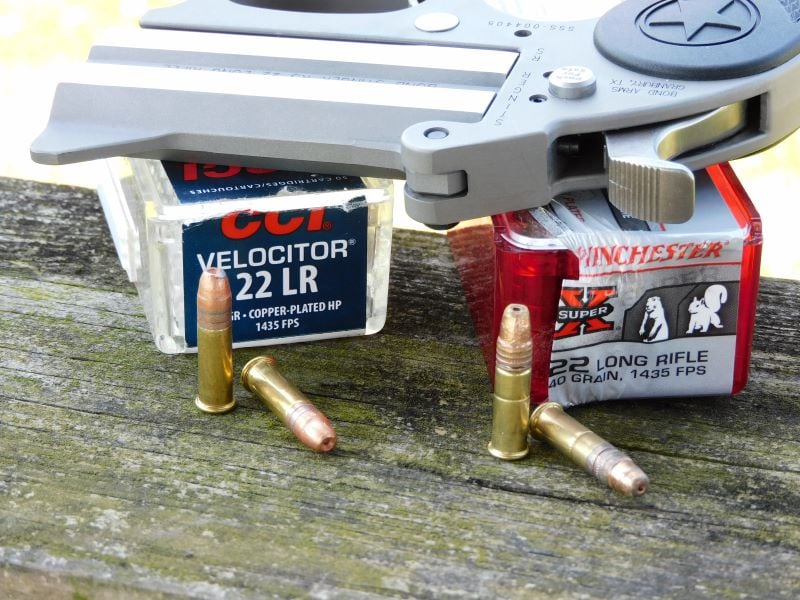
The CCI Velocitor and the Winchester Super X Hyper Speed are both hypervelocity 40-grain loadings designed with larger small game in mind. Both rounds come in brass cases and utilize a copper-washed lead hollowpoint. Both have an advertised muzzle velocity of 1435 feet per second — 155 feet per second faster than high-velocity loadings like the CCI Mini Mag or Winchester Power Point. The Velocitor’s projectile has a round profile and a hollowpoint cavity that appears to be chamfered. The Hyper Speed’s bullet has a semi-wadcutter profile and a slightly longer length. The hollowpoint cavity is a small hole. It is often plugged with the yellow wax that Winchester uses to lubricate the projectiles.
Velocity
The Velocitor and Hyper Speed loads are two of the hottest .22 LR loads on the market. I am most familiar with these loads in the context of coyote hunting with a rifle. More recently, I have heard it suggested that both rounds are the best possible option if you are selecting a .22 caliber handgun for personal protection.
To get an idea of the relative power of both loads, I shot both over my Caldwell chronograph to calculate the average velocity of each load. I fired a string of five rounds of both ammunition from 10 feet away using three different firearms. The first is my Bond Arms Stinger derringer, which wears a 3-inch barrel but only two inches of bullet travel. The second was a Ruger Wrangler revolver with a 3¾ inch barrel. The third is my Browning SA-22 with a 19 3/8 inch barrel. These firearms represent a pocket pistol, a full-sized handgun, and a rifle, respectively.
| CCI Velocitor | Winchester Hyper Speed | |
| Bond Arms Stinger 3.0 inch | 982 | 1022 |
| Ruger Wrangler 3.75 inch | 1118 | 1129 |
| Browning SA-22 19 inch | 1387 | 1408 |
On the whole, the Winchester Hyper Speed load had a slight edge in muzzle velocity. The only difference worth noting is the extreme spread between the lowest reading and the highest for each round. The Winchester load’s spread with the derringer was only 30 feet per second with the derringer. The Winchester remained consistent with a spread of 59 and 61 feet per second with the Wrangler and Browning respectively. The CCI Velocitor’s spread was 86 feet per second with the Bond. The spread increased to 92 feet per second with the Ruger and 99 feet per second with the Browning. Although I did not bench my firearms and shoot any groups, the numbers suggest that the Winchester load’s greater consistency would yield slightly better groups.
Comparative Ballistics
Velocity gives us an idea of how a round can perform downrange, but results may vary when it comes to terminal performance. Both rounds lose quite a bit of their pasta when propelled through increasingly short barrels. How will that translate on target? To find out, I simulated two tests using two Clear Ballistics 10% ordinance gelatin blocks.
Pistol Test
To simulate a worst-case personal defense scenario, I dressed the first block with four layers of denim to simulate heavy clothing and shot it six times with the Bond Arms Stinger from a distance of 10 feet.
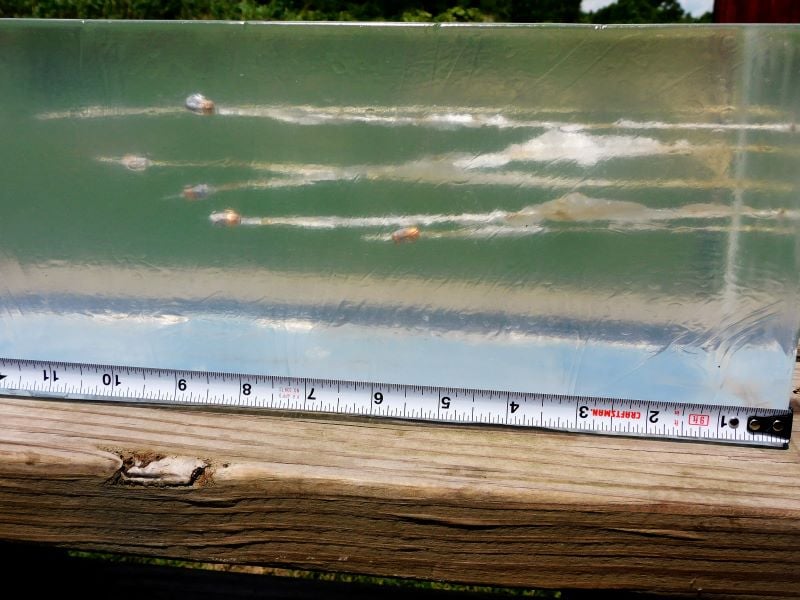
I fired three rounds of the Winchester Hyper Speed to the left side of the block followed by three rounds of the CCI Velocitor to the right. Winchester projectiles failed to expand, but tumbled and settled base-forward with a penetration depth of 9, 9½, and 9¾ inches respectively. One Velocitor round traversed 12½ inches before traversing left and falling onto the ground. Another landed nose-first at 10½ inches. The last projectile favored to the left, tumbled, and stopped short at 6½ inches.
While chronograph testing can be mundane, it did show what was eventually born out. The Winchester had a consistent velocity and penetrated to a consistent depth. The Velocitor had the bad luck of a particularly underpowered round to skew the results, but the two rounds that penetrated the deepest still had more variation.
Rifle Test
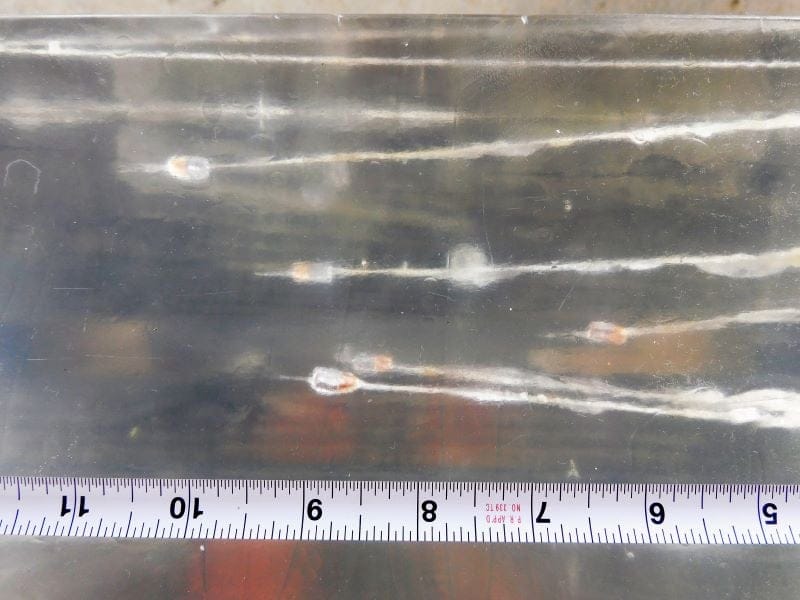
Ballistic gel testing is often tailored toward visualizing the performance of handgun cartridges out of handgun-length barrels. But both the Velocitor and Hyper Speed are designed as hunting loads with a .22 rifle in mind. With that in mind, I broke out my trusty Browning SA-22 and hit a new bare block from a distance of 25 yards. Three rounds of Winchester hit the block on the right side of the block. These were followed by three Velocitor rounds on the left.
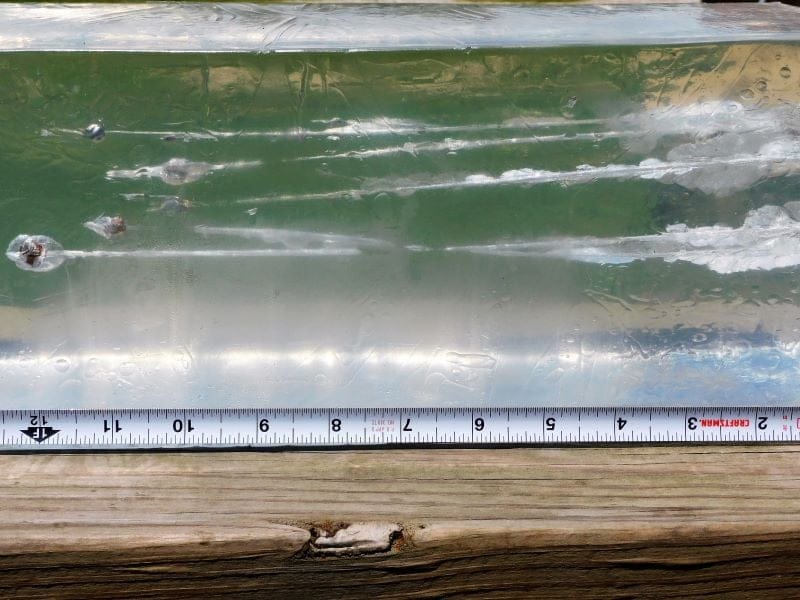
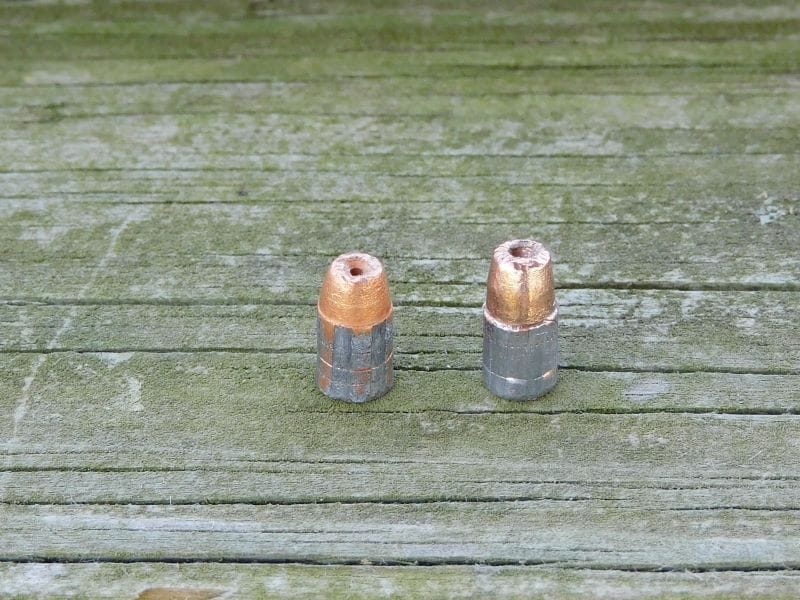
Despite the fact that both rounds are several hundred feet per second faster coming out of a rifle instead of a pocket gun, penetration was only marginally better. The difference came in expansion. All six projectiles opened up and all left substantial inch-wide puckered tracts from entry to the 4½ inch. The CCI Velocitor rounds mushroomed handsomely. Two stopped at the 10½ inch mark. One made it to 12¼ inches. One Winchester load mushroomed, but shed some of its weight. The core stopped at 11½ inches. Two other projectiles mushroomed and stopped at the 10½ inch mark. One of these projectiles also lost some of its petals.

Parting Shots
Without a doubt, the CCI Velocitor and Winchester Hyper Speed loads are two varmint-capable .22 Long Rifle rounds. Both have excellent penetration and expansion for this task, although the Winchester’s fragment loss likely robbed of its theoretical penetration ability. The Velocitor load had excellent, controlled expansion and good penetration. The only downsides to these loads is accuracy and meat damage. You will have to pattern your particular rifle, but I have always found high-velocity loadings to be more accurate than the hypervelocity variety. But if you need power, hypervelocity loads are the way to go. But be wary about drilling a target with too much power. It is beneficial if you are hunting larger predators; but if you seek meat for the pot, there may be little left when employing the CCI Velocitor or the Winchester Hyper Speed.
In pocket pistols, both rounds are reduced in velocity. There is likely not to be any expansion. Expansion and the presence of hollowpoint cavities only create more drag that these little projectiles have to power through to get adequate penetration. If we take the FBI’s standard of 12-18 inches of penetration in gel as gospel, both rounds barely missed the mark in terms of defensive performance. But it is a bit better than conventional high-velocity loads that many folks have used effectively.
Whether you have a .22 handgun for personal protection or a rifle for home defense and hunting, a box of each is worth a try.


