

I’m not a gun snob. I carry every pistol I review. This is the first PSA Dagger I’ve carried and the first of their pistols I’ve shot, and now I’m left wondering why I’m so late to the game.
After 15 years of writing gun reviews, I’ve shot some dogs. There have been times (some as recently as last month) that I’ve gotten in a gun, taken it to the range, and found so many problems that I couldn’t conscionably write a review.
Most of these duds belonged in the lower price point of guns, which seems logical. Cut corners on cost, and the quality is likely to suffer. But this isn’t always the case; some really expensive guns can suck, too.
This Dagger Compact, though… I’d been expecting this to have a few hiccups or be rough around the edges. I’m willing to own it; I set my expectations low based on the price point of the Dagger line. Turns out I was mistaken.

First Impressions of the Dagger Compact
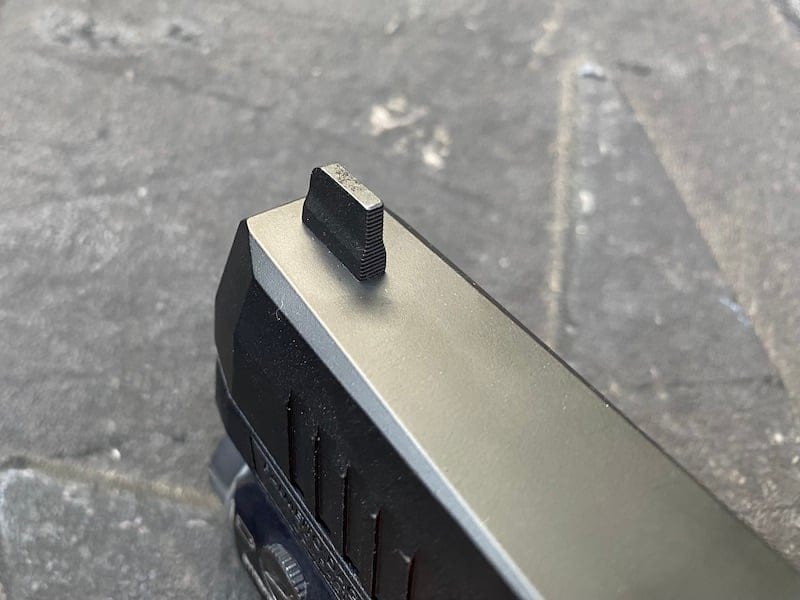
This is the PSA Dagger Compact 9mm Pistol with Extreme Carry Cuts RMR Slide, Black. While that name doesn’t roll off the tongue, it is descriptive. It is cut for an RMR, which, while limiting, seems like a solid choice for a standard mounting pattern. The sights are high enough to co-witness so that work’s done for you.
The Extreme Carry Cuts are designed to make the slide a bit less likely to hang up in a holster. The serrations are crisp, but they could snag inside a holster if they extended higher up on the slide. I say that, but they don’t, and the Dagger Compact fits well in holsters designed specifically for it or for the Glock 19.
You can read that much in the product description on PSA’s site. But what that site won’t communicate is how solid this gun feels in the hand. It is a well-built pistol, and there’s no outward indication of any corner-cutting. This gun doesn’t suck. At all.
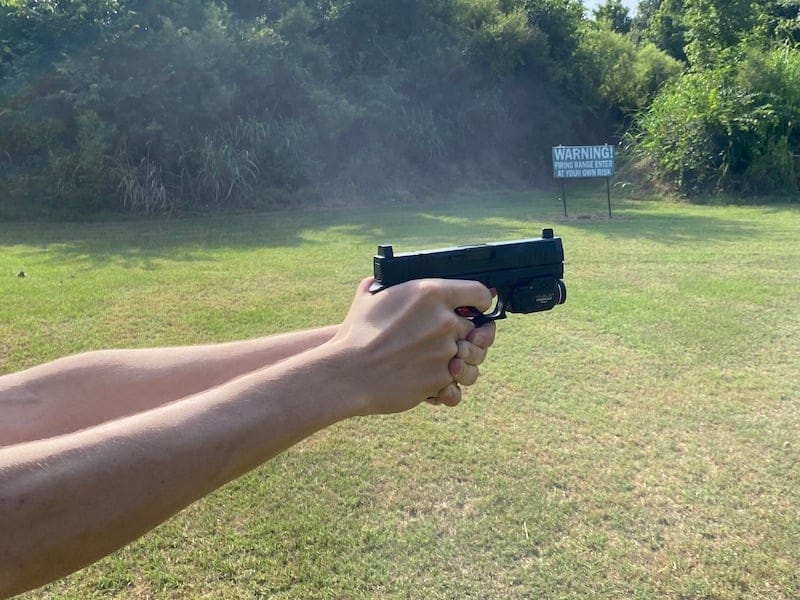
Rack the slide, and you’ll feel what I mean. Some polymer-framed pistols have a wobble or a rattle. I’ve felt some that the connection of the slide and the frame seemed like a bit of an afterthought. Some springs feel ludicrously heavy or surprisingly light. None of those things are true about the Dagger.
The return spring slams the Dagger into battery. The trigger is on par with much more expensive defensive guns, and the fit and finish feel spot on. In fact, all of the checkpoints I’d use to build a first impression of an HK or FN or a Glock—all of the boxes are checked.
Ergonomics
The grip is slightly rounded. While most of its profile seems to line up with that of a Glock, there’s a bit more around the middle, and it rides well in the hand. This addition—and maybe I’m imagining it—isn’t enough to interfere with holstering or concealed carrying.
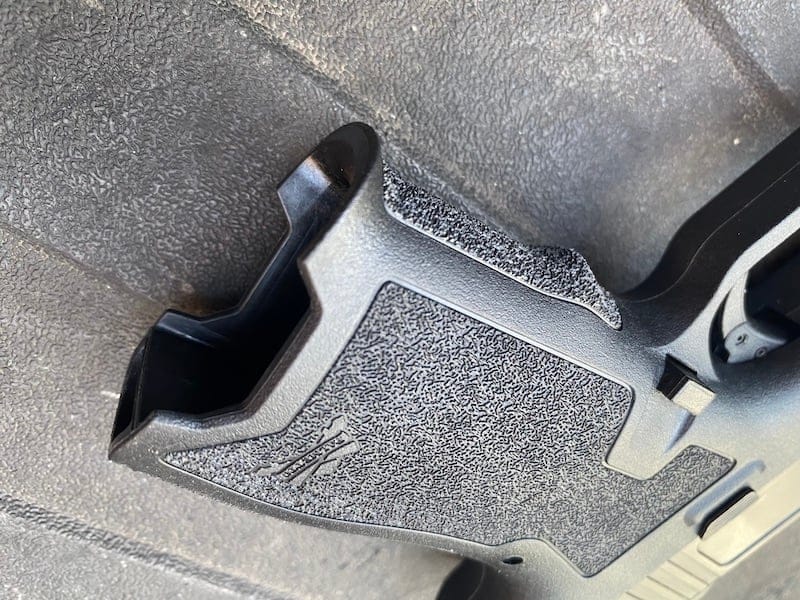
This grip has a fine texture. While most manufacturers have moved toward aggressive random textures that grab skin, this feels more like 120-grit sandpaper. I’m undecided about this. While I like the texture and the way it performs, I’d like more of it. There are smooth borders on the grip that could have more texture, and the sides of the frame are left bare.
This last detail is a missed opportunity. There’s a slight concavity on the frame ahead of the trigger guard that could easily hold a trigger finger or support-hand thumb, with just a bit more of the grit texture there.
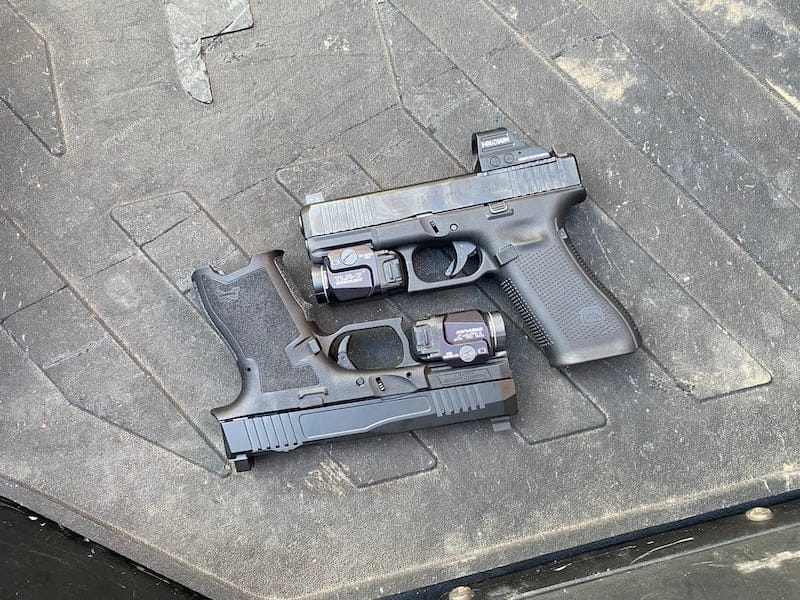
The mag release, too, feels small. I’ve grown to favor larger buttons that I can find fast and reliably without looking at them. As stock buttons go, this one isn’t bad, but I’d look to swap that out. I’ve not gotten there yet with this gun, so I’m not sure which accessories work with which Dagger models. I’m banking on the Dagger working with Gen 3 aftermarket parts, as PSA claims.
The Dagger Economics
There are basic elements about this gun that are par for the course. The DLC coating on the slide and barrel is an example. While PSA offers many other options, these DLC-coated parts will show signs of wear over time and should be kept clean and protected.
I’ve mentioned the sights. These are tall. While not equipped with any glowing dots, they’re great for fine-tuning accuracy. These feel more like target sights than EDC sights, which is fine as most everyone will add on a red dot. As this is cut for a direct mount RMR, the options are decently open. I’d call these a bonus.
Maybe the biggest extra here is the price. Palmetto State Armory broke into this industry at the bottom, price-wise. There’s still a very common core belief at play: you get what you pay for. If you want a high-quality gun, you need to pony up. PSA’s model, perhaps more so than any other gun company, flies in the face of this wisdom.
PSA owns all aspects of their business. They make their own parts, build their own guns, sell them directly… At each stage, they keep more margin. Because they are not paying OEM part builders to mill slides or forge barrels, because they’re not paying two-stage distribution fees to get the guns into buy groups or wholesalers, and because they’re not as interested in selling through big box or gun stores, PSA can charge less and sell direct to you.
I’m not sure how far down the chain this goes. As in, do they make all of the parts? This one ships with a Magpul mag, so I know they’re bringing in some parts. The sights, though? Springs?
The flip side is, of course, that you’ll still need an FFL to handle the transfer. And their margin on the sale will be less, so they may charge more for doing the transfer. But the pricing model remains compelling. And it is working well for PSA.
The value represented here is outstanding. Just because this pistol lists at $349 doesn’t mean it is in the same class as some of the other entry-level guns—far from it. And because it takes Glock mags, there’s no shortage of options.
How far can a PSA Dagger go?
Guns in this price range, quality or not, are rarely tested to extreme round counts. This goes back, I feel, to the very nature of the expectations we set on low-price point guns (and, in no small part, on how we trick them out and use them). I’ve scoured forums looking for data, however anecdotal, and I see occasional mention of spring replacement or replacing triggers, but that’s it.
Their ARs are being torture tested with solid results, though. That inspires confidence.
Since this takes Gen 3 Glock aftermarket parts, there’s plenty of room for repairs and upgrades. For basic upgrades, I’d start with a threaded barrel, a more robust slide stop, and a larger mag-release button.
To cap it off, I’d pick up a solid IWB holster, a bomb-proof OWB, and either the Trijicon RMR I mentioned earlier or an SRO that uses the same mount pattern.
Is it ludicrous to spend more on a red dot than you would on the gun? There was a time when I would have said yes. But after my first three range sessions with the Dagger, I’m willing to look at this the same way I do glass on a bolt action, where I’d never flinch at topping a $1.5K rifle with a $3K scope.
In other words, PSA’s Dagger is just as capable as you are. Any money you spend making it more effective, well, needs to be matched with training time on your part.