

You may have heard the term LPVO before. It stands for “Low Powered Variable Optic,” which is basically a scope that has a magnification range starting at 1x.
All optics have some type of range or magnification that dictates how far you can see your target. Scopes were designed to see further away, allowing the shooter to make those shots that otherwise would not be possible. As the world of optics became the front and center focus of guns, red dots took off like fire in a hay field. The standard became a red dot for closer ranges and scopes for those long-range rifles. An LPVO hits a sweet spot by extending the shooter’s effective range while allowing them to shoot with 1x magnification at closer distances.
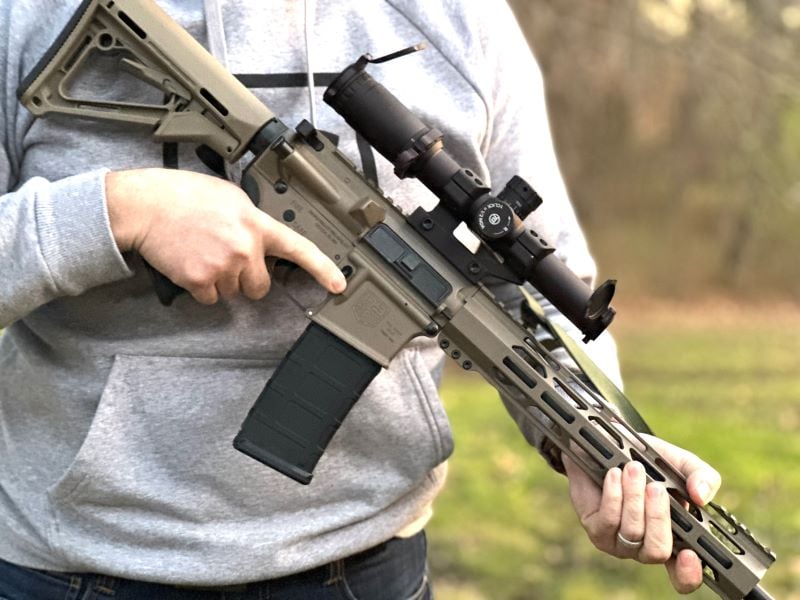
Having a gun set up for CQB (close-quarter combat) and one for long-range shots is great, but it also leaves a gap. What if you need to shoot at a close distance and then a distance further away? You could carry around two guns, but this may get a little heavy. If you need to shoot 800 yards away, then by all means throw a good long-distance rifle over your shoulder. What the LPVO provides is the ability to shoot at close distances while being able to make those moderate-range shots. But does that mean every gun should have an LPVO instead of a red dot?
Benefits of an LPVO
I know people get tired of the common, neutral answers like, “It all depends” or “It’s an individual preference.” But these answers are common because there are so many different techniques and purposes for firearms. So, here is the unhelpful answer for LPVOs: it all depends.
I have always had the mindset that a rifle should have a good red dot with iron backups or a scope for long-range. But an LPVO does fill that gap of one rifle for a little bit of both. LPVOs are becoming more and more popular in the military world. Even the U.S. Marines made an LPVO standard issue for their new battle rifle.
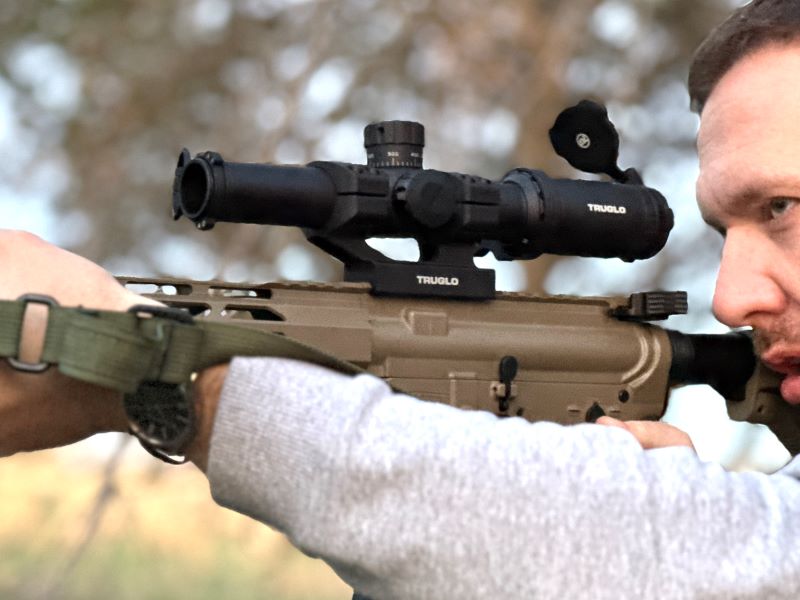
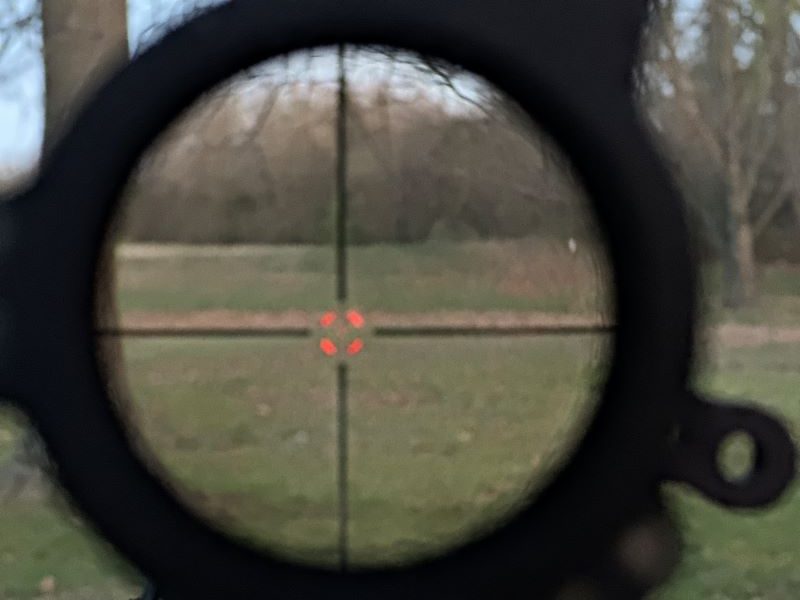
The idea is the shooter can adjust the optic for the magnification they need at the time. With the lowest setting being a true 1x magnification, they still work for close distances. Many LPVOs have an illuminated reticle to help with fast acquisition. When the threat is further away, a quick adjustment allows you to make shots further out. An LPVO is a great option for someone who wants one rifle for multiple purposes. Because the range of an LPVO starts at 1, they are still low-powered at their highest setting. A magnification of 8X for example can help with longer distance shots, but can’t compete with a long-range rifle scope.
Downsides of Using an LPVO
Some people love LPVOs, and some hate them. Others are in the middle, which is where the LPVO lands in the optic world. There are several downsides to an LPVO. The first is size and weight. If you want a compact rifle with compact gear, an LPVO will take up a lot of room on your rail. After all, it’s a low-powered scope. As technology continues to improve, these will become smaller and lighter. But for now, the size is noticeably different.
Another downside to using an LPVO is its range. The LPVO is the answer for both worlds, but it is not the best of either. If you are using a rifle at close distances, the LPVO is not as efficient as a good red dot with a wide field of view. It works, but it’s not the best. For long distances, the LPVO gets you out further than a red dot, but it’s no match for a powerful scope. A sniper will have more trouble clearing rooms with a long gun and scope. A short-barreled rifle with a red dot would be more practical for that purpose. The same works the other way around too. The LPVO blends the two, but you lose the edge on close and long distance.
How does an LPVO compare to a flip-to-side magnifier?
Flip-to-side magnifiers started to gain traction, then slip, and then they came back again. So, what’s the difference between a flip-over magnifier with a red dot and an LPVO? A magnifier is typically a set magnification and not variable. It must also be moved out of the way to remove magnification. When it’s flipped to the side, it can get in the way and catch on to things like your sling. This doesn’t mean a magnifier is not useful. If you enter a building and need a wide field of view, flipping the magnifier to the side allows the shooter the use of a red dot, which is preferred for closer distances.
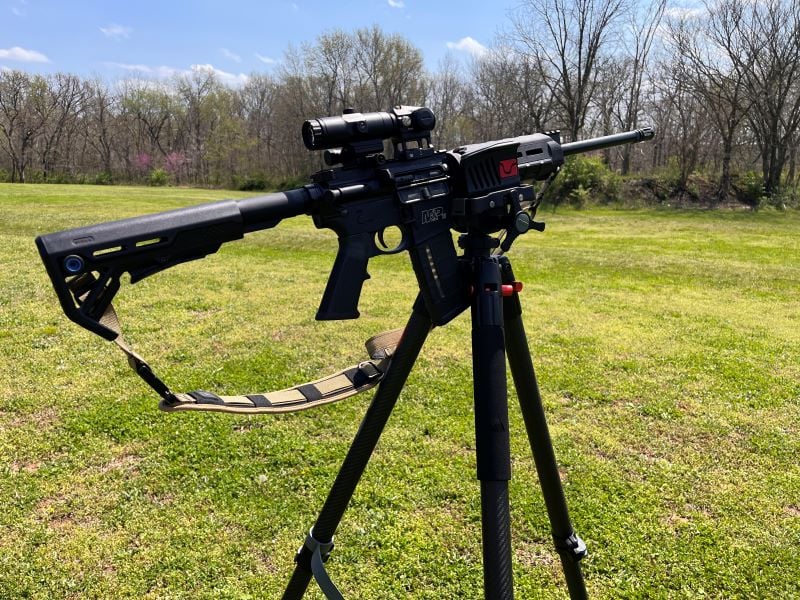
The LPVO is not as comfortable when used in small rooms or confined areas. But a magnifier has a fixed power. The most common are 3x or 4x magnification. An LPVO is at least twice that magnification. If you want to set up one rifle that has the widest range of use, an LPVO or magnifier is the best option. Between the two, I would pick the LPVO, but that’s a personal preference. When I train with both, I do better with the LPVO.
Final Thoughts on LPVOs
For close distances, I like a good red dot. For long shots, I want a high-powered scope. But if I were to set up a multi-purpose rifle that can do a little bit of both, I would pick the LPVO. Aiming devices include iron sights, red dots, LPVOs, and scopes. There is nothing wrong with any of them and they all have strengths and weaknesses. Which type you select depends on the purpose of the gun and which ones you like best. I like to have a set up for close quarters, general purpose, and long range. But that’s just how I do it.
Others prefer having one gun for their specific need. The important thing is to find the optic that works for you. What range do you typically shoot? How far do you shoot when training? If the weapon is for home defense only, red or iron sights may work best. But if you want the option of shooting further out, an LPVO is a great option. Love it or hate it, it’s all a matter of perspective and preference. Find what you like and go with it. There are great quality and budget-friendly options either way.